

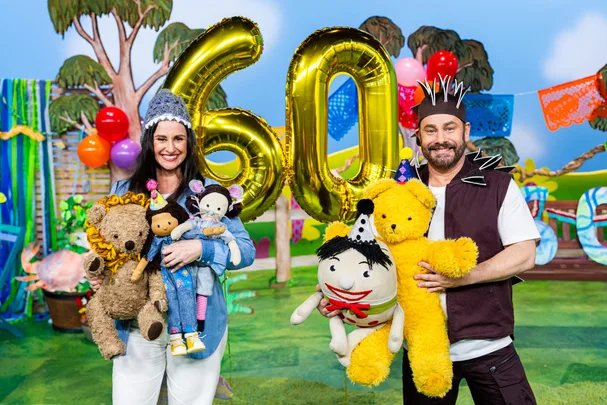
Over the past six decades, much has changed in the world.
But Play School has remained a steadfast beacon in the entertainment and education of Australian children, who have always been at the very centre of the show’s purpose.
As long-term presenter Justine Clarke tells New Idea, on the eve of Play School’s 60th birthday festivities, it has endured because “We all feel like it belongs to us. I think it’s shaped our identity as a nation and, at its heart, Play School is a celebration of play and the importance of play.”
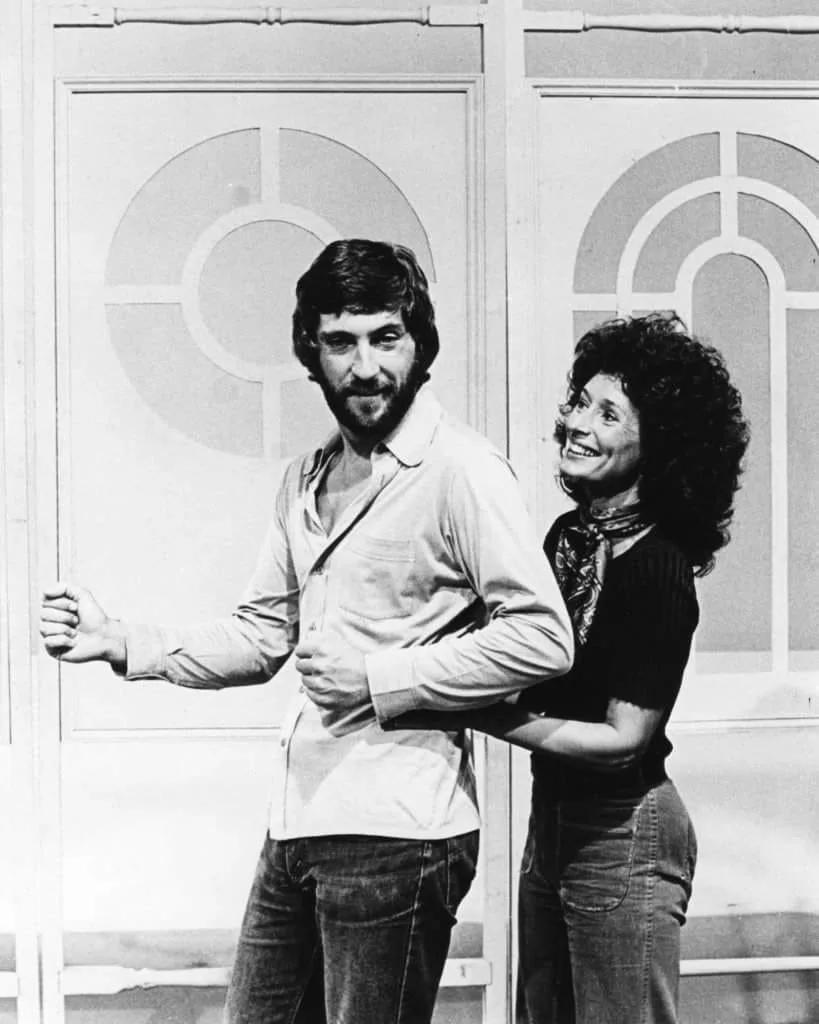
The seminal program first hit our screens, in black and white, on July 18, 1966. Alister Smart and Diane Dorgan were the presenters.
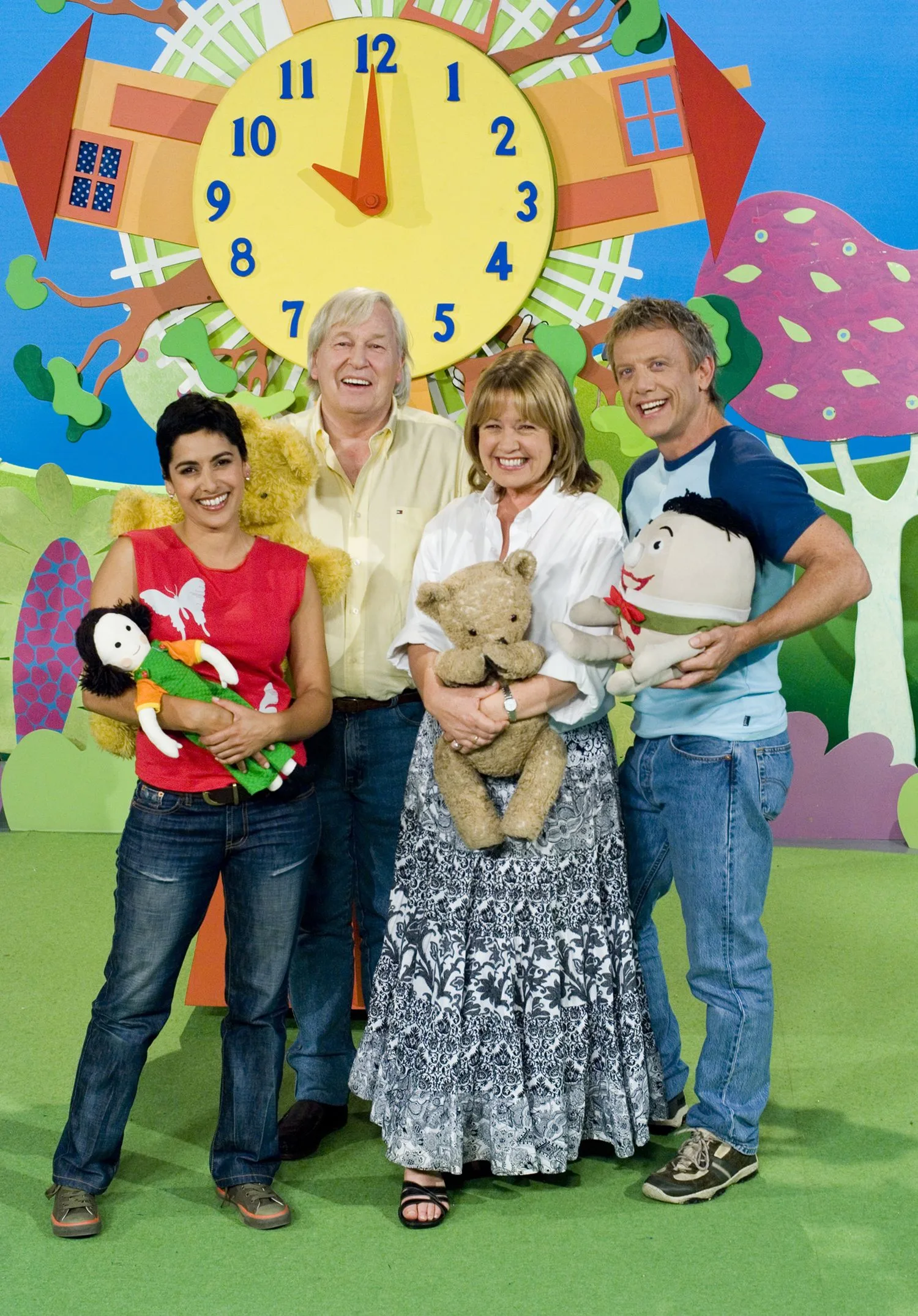
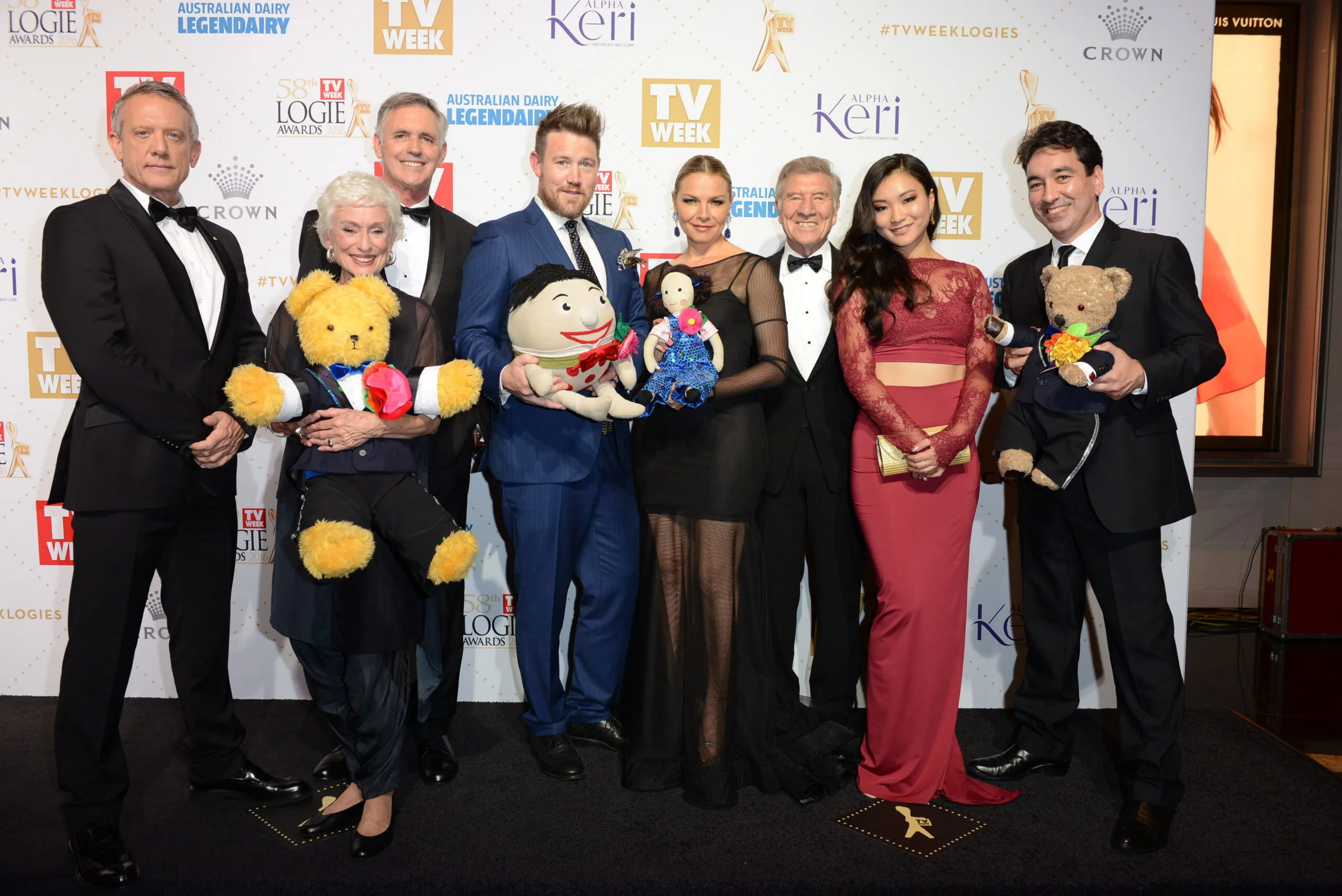
Since then, the likes of Lorraine Bayly, Benita Collings, John Hamblin, Noni Hazlehurst, Rhys Muldoon, John Waters, Don Spencer, Jay Laga‘aia, Alex Papps and Deborah Mailman, plus many more, have been entrusted to play games and have stories to tell.
And of course, the toys are just as important as the hosts! Big Ted, Jemima, Hamble and Humpty were there for Play School’s debut, but since then, the toy cast has changed to include Little Ted, who joined when Hamble was retired.
Daisy, Joey, and Kiya have also been added to the family.
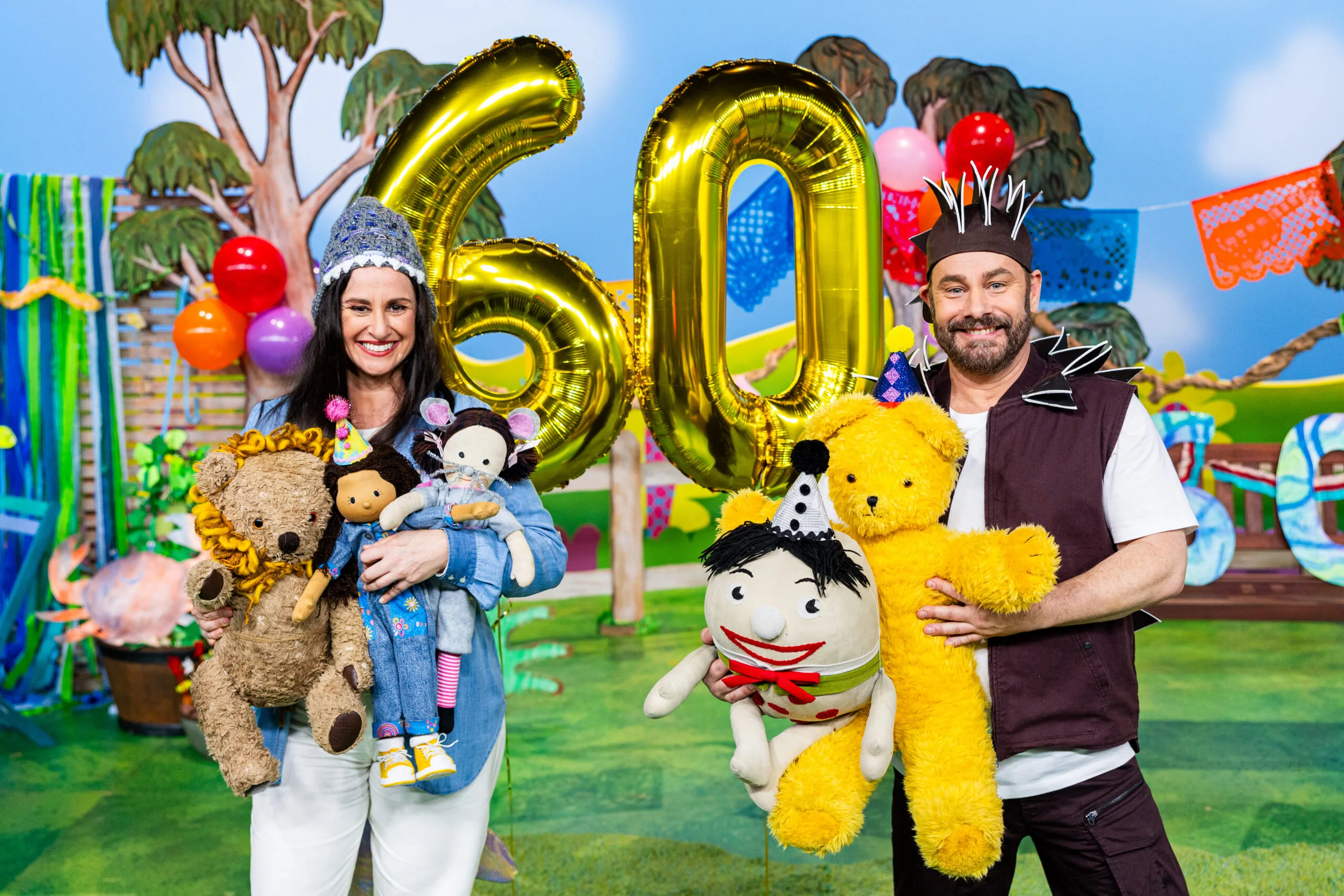
Do the Play School cast have favourite toys?
Play School’s presenters happily admit they love all their toy co-stars, but some are clear favourites!
“I really like Humpty because he’s a versatile performer,” says Justine.
For current presenter Emma Palmer, “Kiya and Jemima bring the girl power”, while Rhys Muldoon says he always favoured Big Ted because “he is a comforting fellow!”
As fans young and old will know, Play School’s windows are an important feature of the show too.


For 60 years, viewers have guessed which window – arched, round, square or diamond – they’ll travel through on the day to view a film about the wider world.
It could include anything from a look at farms and factories to everyday activities or nature.
“Everyone says the arched window is their favourite,” shares presenter Matt Backer.
“But I’m going to choose the circle window as my favourite, for no other reason than I like circles!”
Ahead of its time
In its time, Play School has walked children through a range of issues and featured topics that have caused discussion and debate.
In 2004, a Windows segment narrated by a young girl who mentioned it was her “two mums” who were taking her to an amusement park sparked controversy, as some thought it was depicting a same-sex couple.
Several politicians publicly condemned the segment.
The ABC defended the storyline – and later clarified the girl was actually shown with her birth mother and stepmother – but nonetheless, it caused a heated conversation.
Play School has always championed inclusion with First Nations Australians too, hosting an Acknowledgment of Country episode in 2019.
Indigenous doll Kiya and Korean twins Kim and Lisa are beloved members of the toy family.
“I think Play School has lasted for 60 years and been able to cover such a wide range of topics because children know when something is speaking to them honestly,” presenter Michelle Lim Davidson tells New Idea.
Walking on set for the very first time, 16 years ago, was a “pinch-me” moment for presenter Luke Carroll. He says a stand-out memory is being on their rainforest series set.
“Our art department create the most sublime worlds,” he gushes. “They’re second to none.”
How long will Play School be on air?
As for Play School’s longevity, the cast put it down to a number of reasons.
“Because it’s good and it’s not trying to sell kids anything,” Rhys says.
Presenter Leah Vandenberg adds, “There’s a real family feel” to the program.
And as for its future?
Former star Simon Burke says its dependable formula will ensure Play School airs “for another 60 years at least. It’s a place full of integrity, kindness and fun – and that’s why it’s part of, and will continue to be, our national fabric.”
Happy 60th birthday!

