


Sitting in a dimly lit cinema with a tub of salty popcorn, I thought I knew what to expect from Obsession, the breakout horror sensation written and directed by YouTuber-turned-filmmaker Curry Barker.
I knew the premise well enough – a guy has an unrequited crush and makes his feelings everyone else’s problem.
But what I didn’t expect was just how deeply and realistically unsettling the film would turn out to be.
If you’re as chronically online as I am, then you’ve likely heard about the viral “Man vs Bear” debate that took over social media.
Last year, the internet practically broke over the question: if you were stranded in the woods, would you rather run into a wild bear or an unknown man?
Many women collectively chose the bear, leaving certain men online wondering why we’d trust a literal predator over a stranger.
As I watched Obsession, I couldn’t help but notice one cruel irony. The movie’s terrifying villain isn’t a monster in the woods… he’s a softly spoken, utterly unassuming “nice guy” named Bear.
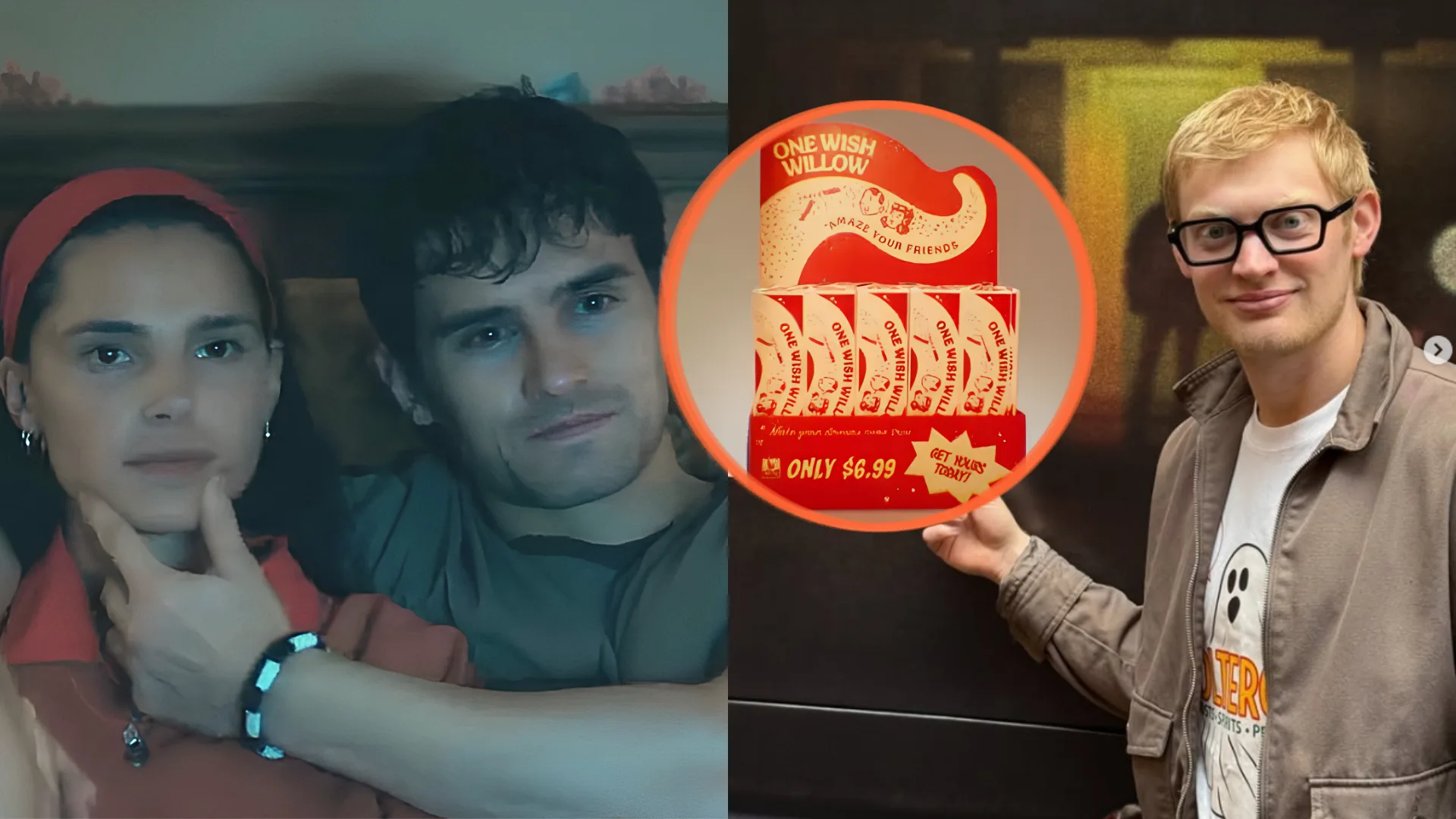
When romantic pursuit crosses the line
In the film, Bear (played by Michael Johnston) nurses a secret crush on his childhood friend and coworker, Nikki (played by Inde Navarrette).
Too insecure to put himself out there, he half-jokingly makes a wish on an ’80s novelty toy called the One Wish Willow. His wish? For Nikki to love him more than anyone in the world.
To his surprise, it works spectacularly. But as her affection rapidly morphs into a violent, possessive spell, Nikki’s personal agency is completely stripped away.
And instead of trying to break the spell she’s under, Bear actively chooses to ignore the horror because he’s finally getting what he wants.
When he calls the hotline listed on the toy’s packaging to complain, it’s assumed he wants to break the spell. Instead, he insists that he doesn’t want to stop the spell but rather alter it so that Nikki is ‘normal’ again.


Another one of the film’s chilling moments is when Nikki briefly breaks through while her alter-ego is asleep and begs Bear to end her misery.
Devoid of any empathy, Bear defensively asks, “What’s so bad about being with me?”. When the real Nikki whispers “I’ve never been with you, Bear”, he simply turns away and leaves her there, begging.
The real horror hits closer to home
While the film’s supernatural elements dial up the jump scares, the true terror of the film isn’t a demonic toy.
Instead, it’s the male entitlement and coercive control we see seeping from Bear’s progressively worse behaviour.
Barker himself cemented the film’s core message to TIME Magazine: “Any time you wish for something, it’s probably going to be selfish… If you’re forcing someone to feel a certain way about you, it doesn’t really matter how you word it. Love should be earned.”
In Australia, the underlying horror of coercive control is a daily reality for many people, particularly women.
One in four women have experienced emotional or psychological abuse by a partner, according to the Australian Bureau of Statistics.
Lovehoney’s Sex and Relationships Expert, Sarah Lorrimar, points out that non-physical pressure rarely looks like overt force in the beginning. Instead, it creeps in under the guise of romantic persistence.
“It’s not necessarily that women assume every man is dangerous, but they often have to assess risk in ways men rarely have to think about,” she tells New Idea.
“Is he respectful, or is he only respectful while he’s getting what he wants? Will he accept a boundary, or will he see it as a challenge? Will rejection be met with understanding, or with anger, guilt, manipulation, or retaliation?”
That distinction is critical, especially when non-physical coercive control often goes unnoticed until it escalates, research shows.
A study by the Australian Institute of Health and Welfare found a majority of emotional abuse victims reported gaslighting or emotional manipulation. More than half of them also reported being isolated from loved ones.

A romantic gesture or sign of controlling behaviour?
In pop culture, persistent pursuit has long been romanticised. It’s the classic trope where if a guy acts like a “good guy” long enough, he eventually deserves the girl.
Obsession brilliantly rips off these rose-tinted glasses we’ve worn for so long and turns the trope inside out.
What makes this especially terrifying is that the pressure rarely starts with outright aggression.
Bear embodies an idealised version of the romantic pursuer, but underneath his soft demeanour is a growing sense of entitlement that disregards Nikki’s autonomy and consent.

His aggression emerges through a subtle belief that affection, attention, or intimacy are “owed” as a reward for being nice.
In real life, coercive control shows up when a person treats “no” as an obstacle to overcome rather than a boundary to respect. Or, when someone uses guilt to make a partner feel responsible for their own insecurities.
“Healthy relationships are built on mutual respect and choice,” Lorrimar adds.
“When one person prioritises their own desires over their partner’s autonomy, then consent becomes compromised.”
See more New Idea on Google – Save us as a Preferred Source

