

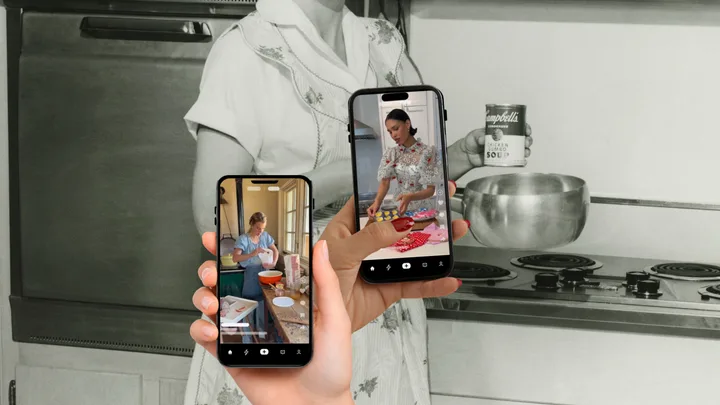
If you’ve spent any time scrolling through social media lately, you’ve likely encountered a very specific, pastel-hued fantasy – the online ‘tradwife’, a social media subculture that glamourises a return to ultra-traditional 1950s gender roles.
It features effortlessly beautiful twenty-something women in linen dresses and couture baking sourdough entirely from scratch, milking heritage cows, and keeping immaculate homes – all while smiling serenely for the camera.
It’s marketed as the ultimate antidote to modern stress, daintily packaged under the tempting label of “soft living”, but while the lifestyle looks like a peaceful dream through a smartphone screen, it’s masking a much more dangerous truth.
Enter author Caro Claire Burke’s viral debut novel, Yesteryear.
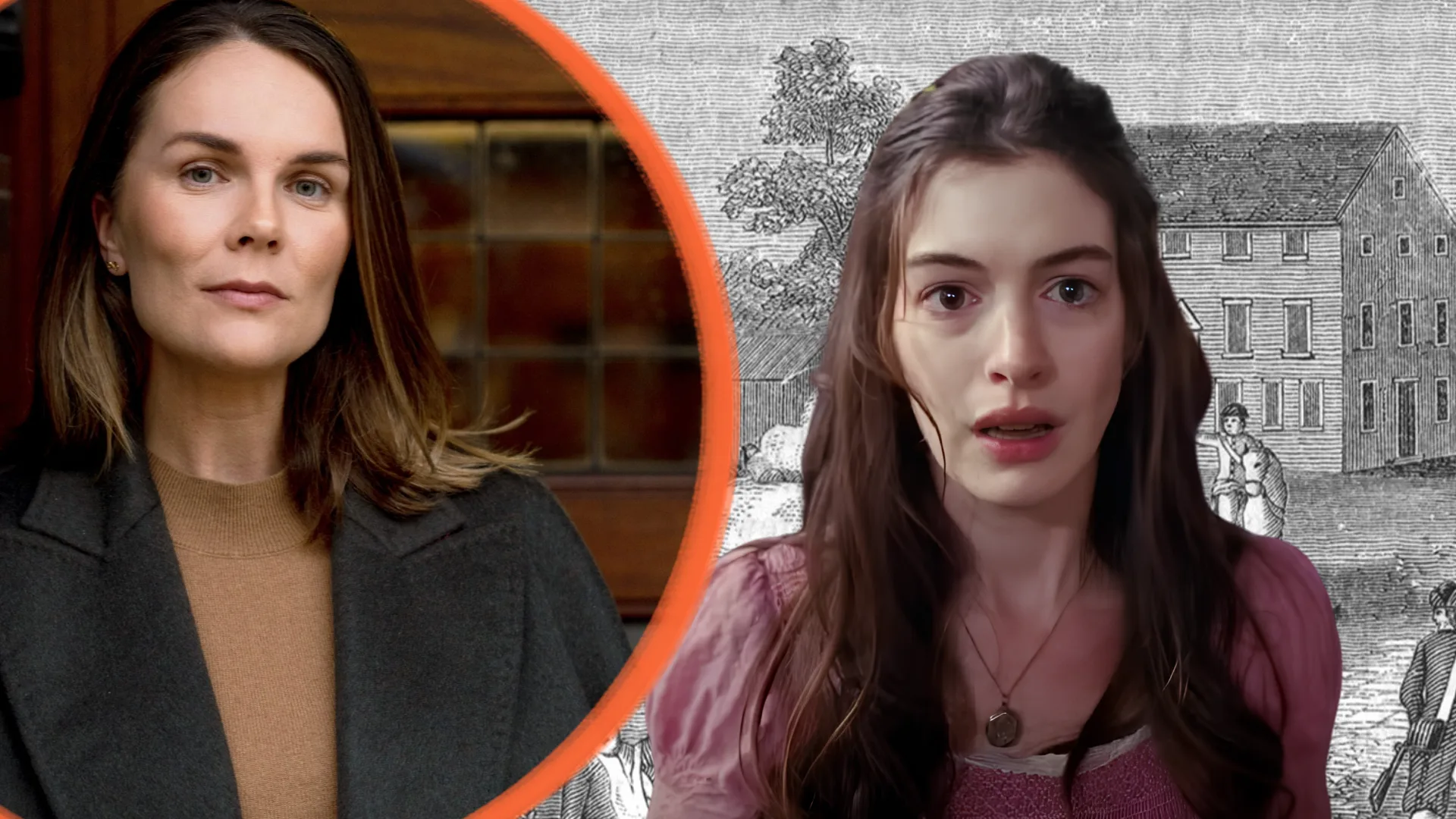
How Yesteryear’s tradwife fiction reflects reality
In Yesteryear, tradwife Natalie Heller Mills appears to have it all: a gorgeous Idaho ranch, a handsome cowboy husband, and five beautiful children who happily eat her picturesque, homemade sourdough.
To her five million Instagram followers, she is the ultimate “tradwife” icon.
But behind the scenes, the idyllic lifestyle is a total illusion propped up by a hidden army of nannies, dynamic social media producers, and industrial-grade appliances.
The story takes a nightmarish psychological turn when Natalie suddenly wakes up one morning stripped of her modern luxuries, standing in a harsh, grueling version of reality carved with the year 1855.
Forced to survive true historical domesticity without her modern safety nets, Natalie’s curated fantasy quickly transforms into a desperate battle for escape.
While the gripping psychological thriller has become an instant sensation among bookworms, it’s serving as a chilling reflection of the realities women face when the fairytale fades.
Yesteryear isn’t just a dark satire about a tradwife; it’s a timely wake-up call. (And if that’s not enough to stir your interest, Anne Hathaway is attached to star and produce the film adaptation.)


From manosphere blogs to perfectly curated social feeds
It was a recent essay Burke penned for The Guardian off the back of the book’s success that really drove the point home about how the online resurgence of the “tradwife” is built on a dangerous facade.
In it, her argument is simple yet straight to the point: the rise of the “tradwife” is not because of the pretty picture influencers paint on social media (despite what we may have initially thought).
Instead, Burke notes the modern phrase’s darker origins, coined by anonymous “incels” on Reddit blogs before algorithmically finding its way into mainstream feeds.
The problem now? Instead of an anonymous account complaining about modern gender roles, the trend is fronted by content creators dressed to the nines while churning homemade butter.
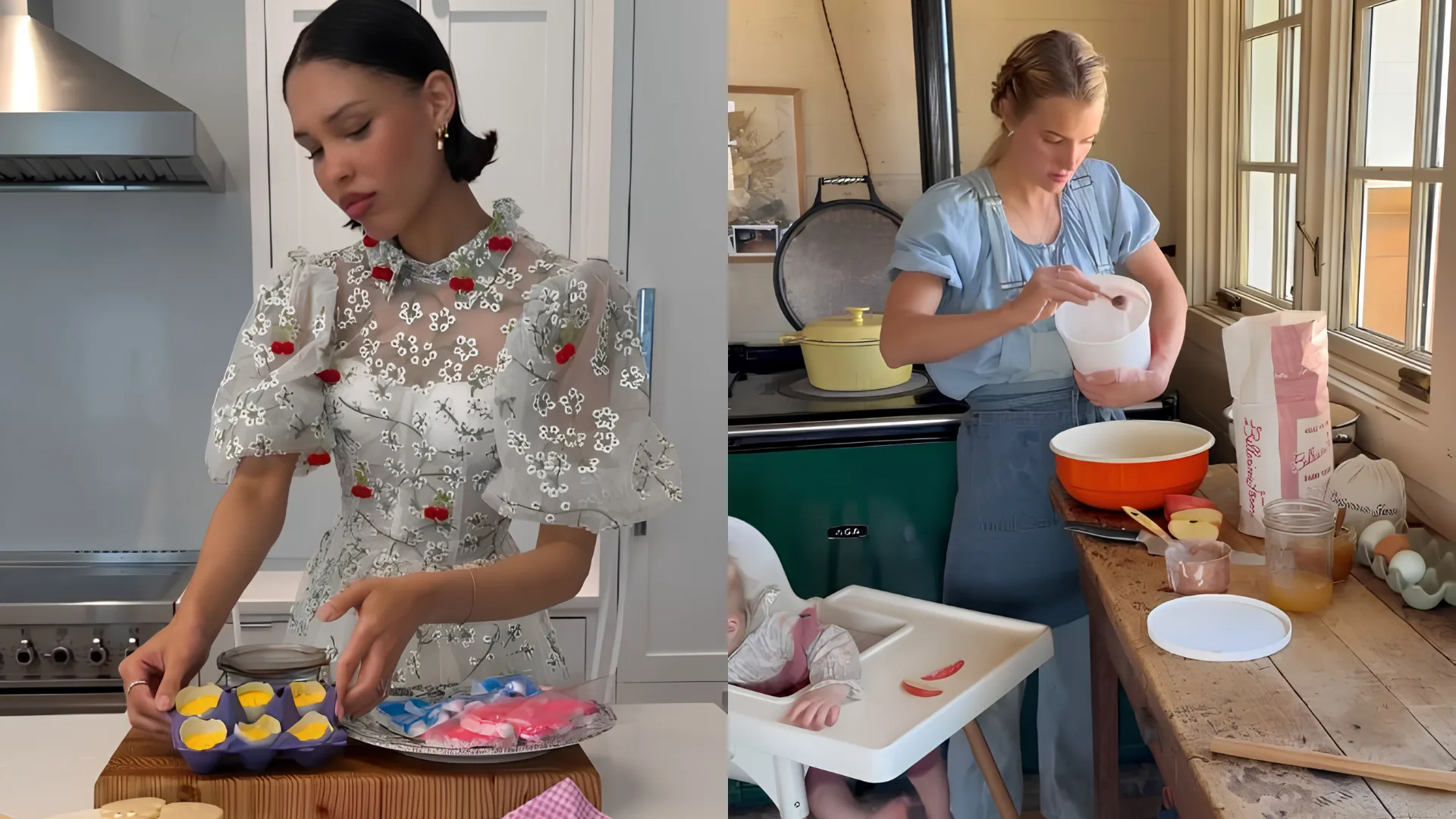
“[People] associate tradwife with the day-bright social media presence of influencers like Hannah Neeleman and Nara Smith,” Burke writes, which one could argue are the inspiration behind Yesteryear.
“Two women who have managed to balloon their pre-existing wealth into eight-figure empires by broadcasting home births and making cereal and bubblegum from scratch while dressed in couture”.
While these particular internet stars have denied the “tradwife” label – reiterating that they run highly lucrative businesses and model – the decision feels as if it is no longer in their hands.
The damage is already done. Millions of views on short, glossy clips have cemented the fantasy of a wife plucked straight from a mid-century advertisement.
As Burke puts it: “The tradwife is an advertisement, a curated performance of womanhood with a link in bio for purchases, who has shown up… to remind women of their true purpose: serve, smile, procreate and purchase.”
The resurgence of the ‘tradwife’ does more harm than good
According to Sydney-based family and divorce lawyer Cassandra Kalpaxis, this sudden glamourisation of the lifestyle is concerning on many levels.
“TikTok sells the tradwife lifestyle as ‘soft living’, but what it often leaves out is that someone is paying the price for that softness,” Kalpaxis tells New Idea.
She explains that influencers present these traditional roles as a desirable aesthetic while completely glossing over the severe economic and safety risks involved.
The truth behind the facade can be an incredibly hard pill to swallow, as realised by Yesteryear’s tradwife Natalie.
In her family law practice, Kalpaxis frequently works with women from a generation where giving up a career to raise a family was the norm.
They spent decades as the heart of the household. But the moment a divorce is on the horizon, these same realities hit hard.
Sacrificing years of income, career progression, and superannuation contributions creates a financial void that is monumentally difficult to rebuild later in life.
In fact, women over 55 are now one of the fastest-growing groups experiencing homelessness in Australia, a statistic Kalpaxis says is linked to long-term financial vulnerability.
“For some women, leaving the workforce was never a choice but a result of coercion; for others, financial dependence created an imbalance that was later weaponised,” she explains.
What Burke’s Yesteryear manages to capture so effectively about the tradwife, she adds, is the exact moment this fantasy meets reality.

When fantasy meets reality
It is not hard to see the initial appeal of the trend – a slower pace of life focused entirely on home and family. But the reality after a marriage ends is that things can be deeply confronting.
Kalpaxis notes that women in their 40s and 50s re-entering the job market after years away face soaring housing costs, rising living expenses, and an increasingly competitive corporate landscape.
At the same time, they’re often navigating the emotional fallout of a separation while continuing to shoulder the bulk of the caregiving responsibilities.
“The economic consequences of leaving the workforce can last long after the children have grown up,” Kalpaxis adds. “That’s why I encourage women to think about financial independence as a form of insurance.”
While relationships can be wonderful and lifelong, maintaining a connection to the workforce, building your own superannuation, and holding assets in your own name provide critical protection if life doesn’t go to plan.
Why the dream can become a financial trap for women
When you’re dealing with the stresses of modern life, it can be incredibly tempting to rely on a partner entirely for financial security, banking on the relationship lasting forever.
However, using financial dependence as a safety net goes far beyond an uneven division of labour. Over time, dynamic power imbalances can silently corrupt a relationship.
While anyone can be placed in a vulnerable position during a breakup, women are statistically far more likely than men to experience economic and emotional abuse, according to data from the Australian Institute of Health and Welfare.
Kalpaxis reveals that the majority of the divorce matters she handles involve some form of domestic or financial abuse.
Outdated gender roles, she warns, are just another way this behavior becomes normalised, excused, or used to justify controlling behavior.
Ultimately, Kalpaxis’s number one warning to women consuming this content online is sharp and straight to the point.
“Never confuse being looked after with being financially secure,” she warns. “Relationships can change, people can change, and circumstances can change. Every woman needs a Plan B.”
Here’s what the New Idea team had to say about Yesteryear…
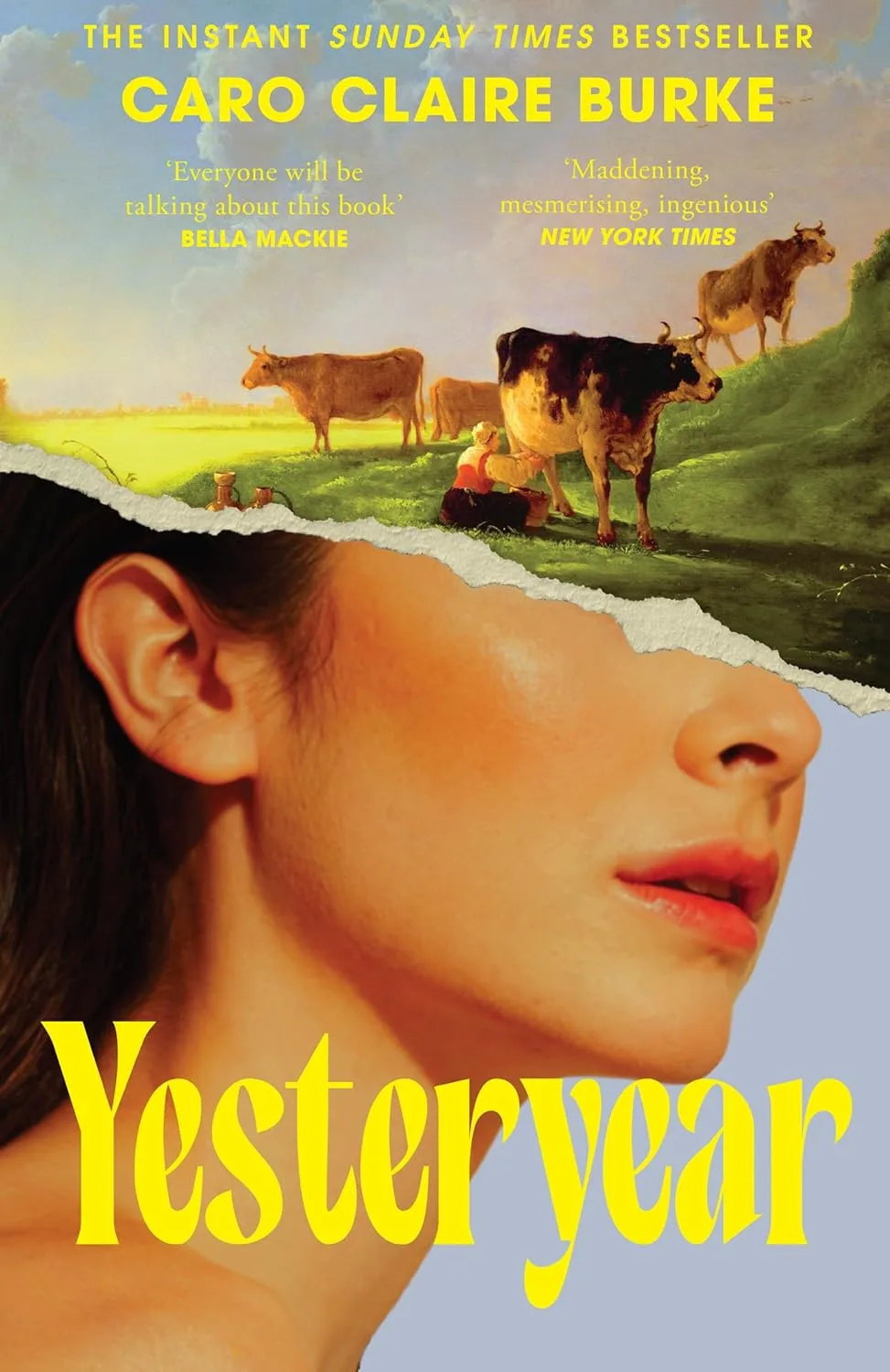
Yesteryear
By Caro Clair Burke
1. Stephanie De Nobile, Senior Lifestyle Content Producer
Once I started, I couldn’t put Yesteryear down. Clever, funny, and completely addictive, it takes the dreamy social-media image of the trad wife lifestyle and turns it on its head, revealing the much messier reality behind it.
Equal parts entertaining and eye-opening, it’s a fresh, witty reminder that the ‘good old days’ weren’t necessarily so good for everyone and that not everything is as it seems online.
One thing is for sure: I won’t be quitting my job anytime soon to churn butter!
2. Celia Whitley, Senior Entertainment Content Producer
If you’re trying to get back into reading, this book is the PERFECT one to grab.
Caro nailed the storyline – and created an entertaining protagonist, “tradwife” social media influencer Natalie, who I loved to hate.
With each chapter slowly revealing the truth of what’s really going on, you’ll find it hard to put this one down. A well-written story that pulls back the curtain on the realities of social media – and how an obsession with Instagram can be detrimental.
It makes me worry for those who follow the trad-wife trend online, as it is not always what it seems! It’s very easy to get sucked in when everything looks beautiful – but we need to remember that this is just a curated snippet and not real life.
3. Elizabeth Gracie, Digital Editor
Yesteryear had me completely hooked, and then that twist absolutely floored me. Caro Claire Burke spends the whole book letting you assume you know exactly what kind of story you’re in – and then pulls the rug out so completely that you’ll want to immediately flip back to page one and reread everything with new eyes.
Natalie is one of those rare characters you simultaneously root for and can’t stand – infuriating, magnetic, impossible to look away from. What starts as a sharp send-up of tradwife influencer culture turns into something much darker and stranger than I expected.
See more New Idea on Google – Save us as a Preferred Source

