

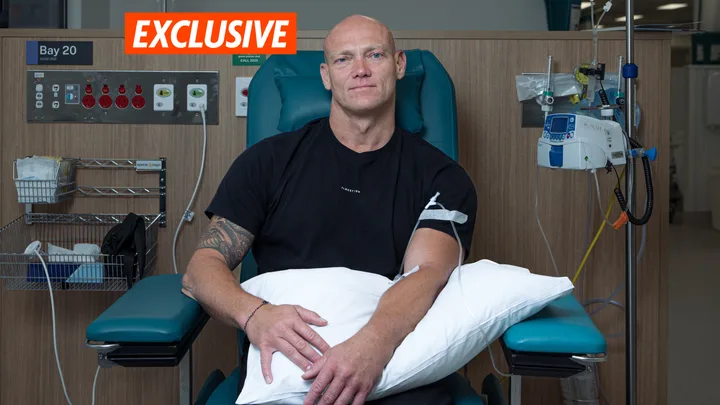
Michael Klim’s life changed forever when he was diagnosed with a rare neurological disorder six years ago.
The Olympic swimmer, 48, lost the ability to walk after being diagnosed with Chronic Inflammatory Demyelinating Polyneuropathy (CIDP), which causes muscle weakness and issues with mobility.
Speaking exclusively to New Idea, Michael credits blood donors with helping him to “get his life back” as he backs Australian Red Cross Lifeblood’s plea for more donors amid nationwide supply shortages.
“Potential donors don’t necessarily understand how beneficial it can be to [donate blood]. For me, it’s really given me my life back,” he tells us.
“It’s given me a level of functionality back. I can coach, I can go to the gym, I can be on my feet a lot more, and I can be an active member of society again.
“I was really becoming a recluse, and everything became really hard. Even things like going to the shop became difficult because I had to really plan where I parked the car and how many steps would be from one place to the next.”
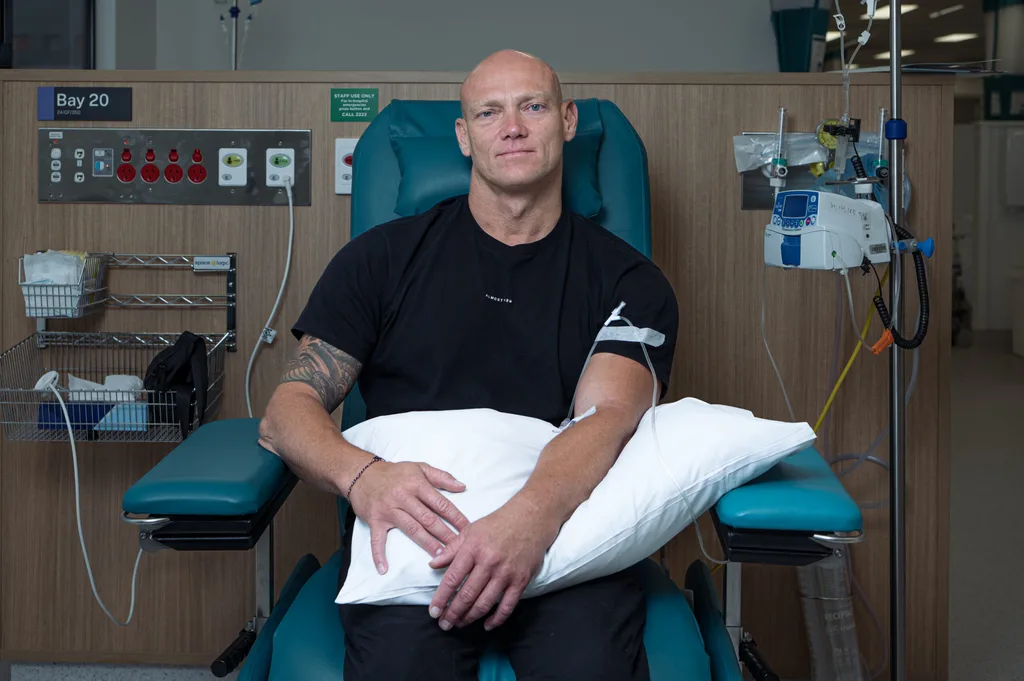
While his diagnosis was heartbreaking, everything changed for Michael when he started Intravenous Immunoglobulin (IVIg) therapy, which infuses healthy antibodies (from thousands of donors) into the bloodstream to filter out harmful antibodies.
A single dose of treatment, which he needs every three to six weeks, relies on 32 blood donations, so Michael knows firsthand the life-changing value of donors.
“I still don’t have any sort of certainty in terms of how I’m going to be in five or 10 years, but one thing that it does give me peace of mind is knowing that I’ve got this treatment,” he says.
“It’s been working and it’s been keeping me nice and steady.”
Michael candidly admits that his diagnosis came with a huge mental toll at first due to his physical limitations, but his treatments have helped him to find a sense of “peace” and stability.




“Sometimes the biggest thing is really the mental side of treatment and the uncertainty of recovery,” he adds.
“Initially, there was that huge level of uncertainty, which caused a lot of stress, a lot of drama within myself, internally, because I was losing an identity and I was trying to find a new one.
“That mental battle is probably the hardest. But the steady treatment that I have regularly gives me a lot of peace now that I know that I can stay where I am at the moment.”
Michael is raising awareness for the importance of donors as blood supplies are running very low in Australia. He is backing Australian Red Cross Lifeblood’s call for 13,000 A and O blood donations in the next week to combat the shortages.
“A lot of the time, people don’t realise how significant blood and plasma donation is and the difference that it can make,” he explains.
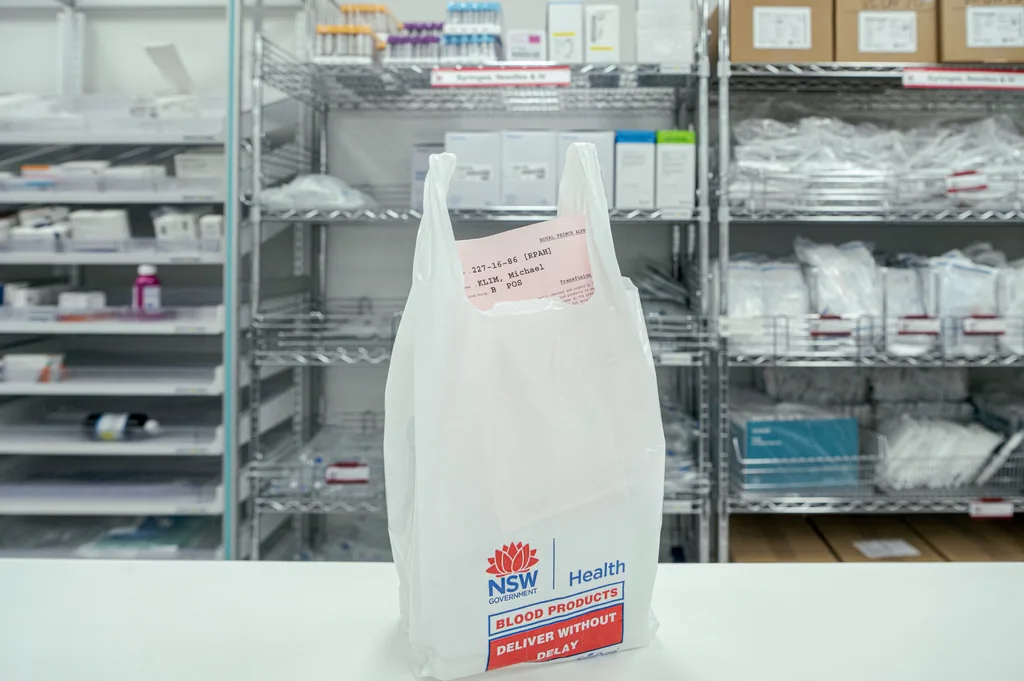
“For me, personally, I thought that blood and plasma donations were not really used in trauma, but I didn’t realise that they are widely used around childbirth as well as cancers.
“There are now so many blood products that are particularly being produced to help people like myself with CIDP, neurological conditions, and MS.”
Michael says he has been “fortunate” that blood donation shortages have not yet affected his life-changing treatments, but adds, “It does make me think every time though.”
“On Monday [I had my treatment] and there were 32 donors that made that treatment possible,” he continues.
“Sometimes I do two days back-to-back, which is 64 donors, which is an astounding number. It makes me really feel grateful for everyone who has donated, but also [shows] how life-changing that selfless act can be.”
He praises blood donors as “amazing humans” and encourages more people to donate, insisting it is a simple procedure that most people are eligible for.
“People think that they’re not eligible because of tattoos or even if they lived in the UK, for example,” he says.
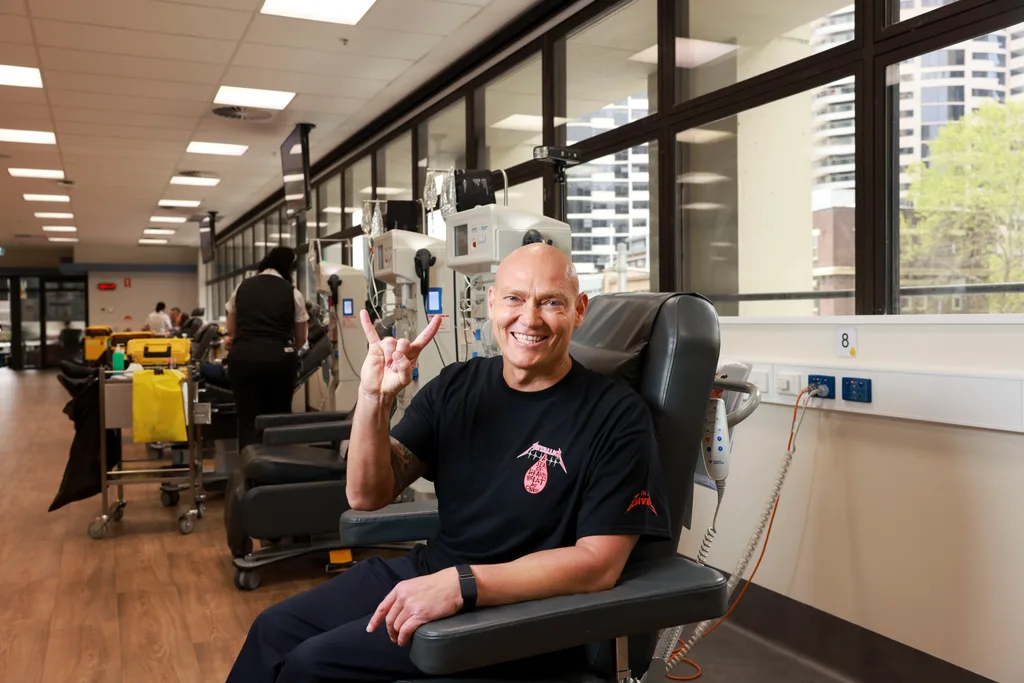
“A lot of these things have been quashed recently, so I would recommend everyone just having a read of all the eligibility questions.”
You can generally donate blood in Australia four months after getting a tattoo or travelling abroad, so it doesn’t stop people from donating for long.
Lifeblood are encouraging more people to donate before winter, which has the highest appointment cancellation rates due to illnesses.
With supplies already falling to critical levels, they are urging more people to donate blood to put less pressure on supplies. Currently, a blood donation is needed every 18 seconds across Australia.
People who don’t know their blood types are also encouraged to donate, as all blood types are needed, including for plasma.
“I guarantee anyone that wants to donate will feel great about it once they do it,” Michael adds.
To book a donation, call 13 14 95, visit lifeblood.com.au or download the Lifeblood app.

