

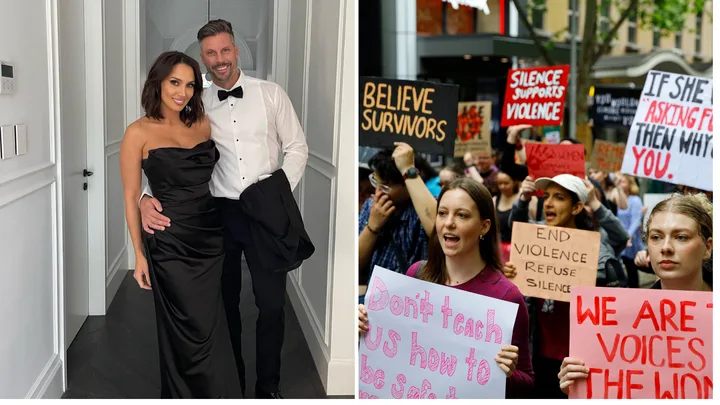
Content warning: This article mentions domestic violence. If you, or anyone that you know is affected, help is available. Contact 1800 RESPECT (1800 737 732), or visit the website.
Before allegedly grabbing his wife Snezana Wood by the throat, pushing her head against a wall and banging it on the floor or a wall, celebrity fitness guru Sam Wood is accused of telling her and his 21-year-old stepdaughter, Eve, they “can both die”.
The allegations, which were heard as part of Wood’s failed bail hearing on October 30, were deemed “extremely serious” by Justice Patrick McCafferty.
He elected to keep Wood, 46, in jail until his trial, likely to be held in mid to late 2027.
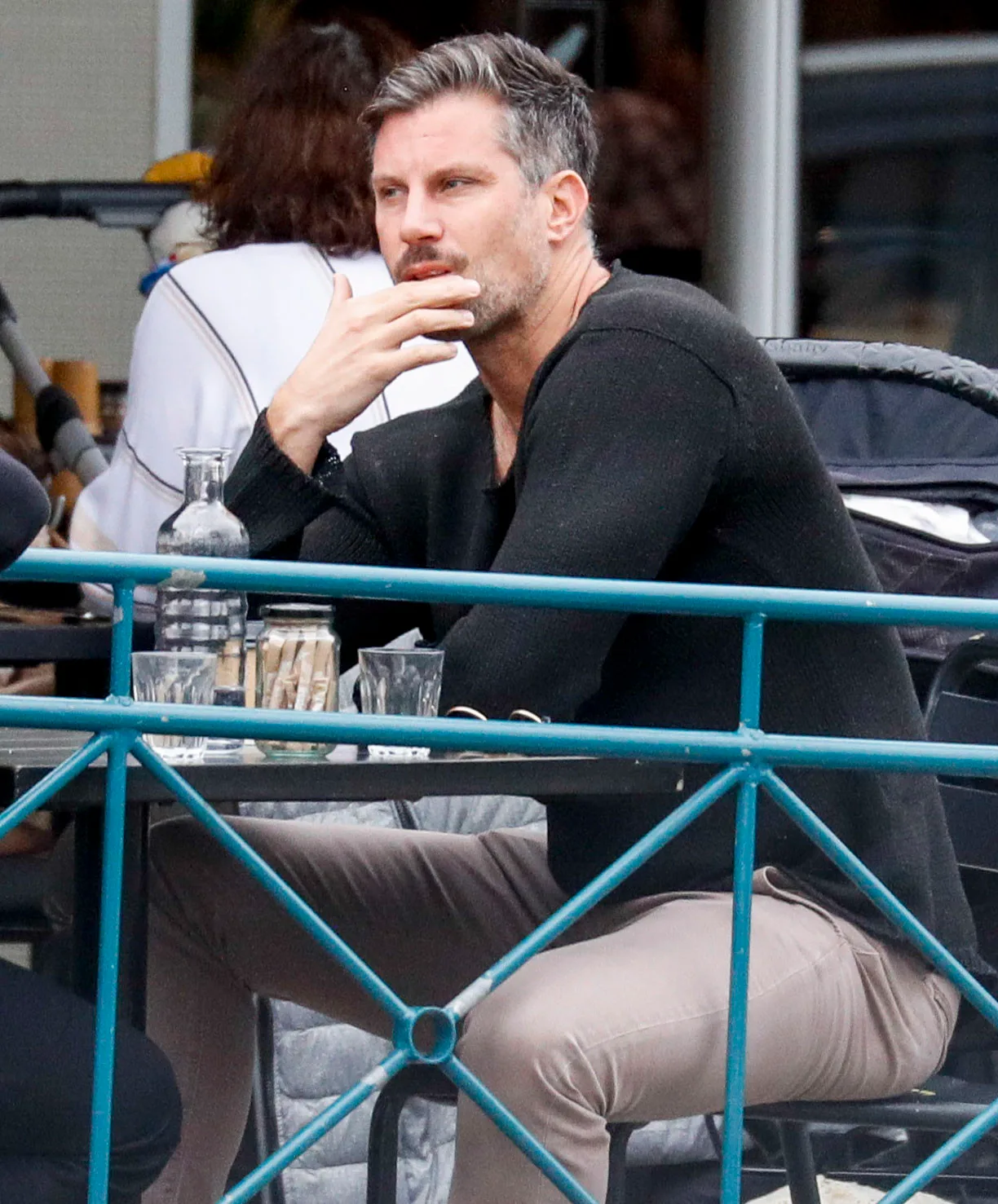
The allegations would be shocking in isolation, but what makes them more concerning for the Australian public is that Wood’s alleged incident of family violence is just the tip of the iceberg in what experts are calling a crisis gripping the nation.
“The scale of male violence against women absolutely is a national crisis,” Claire Hurst, the national director of White Ribbon, tells New Idea.
“The Australian bureau of Statistics 2021-2022 Personal Safety Survey found that one in four women [from age 15] had experienced physical or sexual violence by an intimate partner. That doesn’t even account for the violence in 2026 and those stats are shocking.”
As of late October 2026, a heartbreaking 56 women had been killed as a result of family-based violence this year.
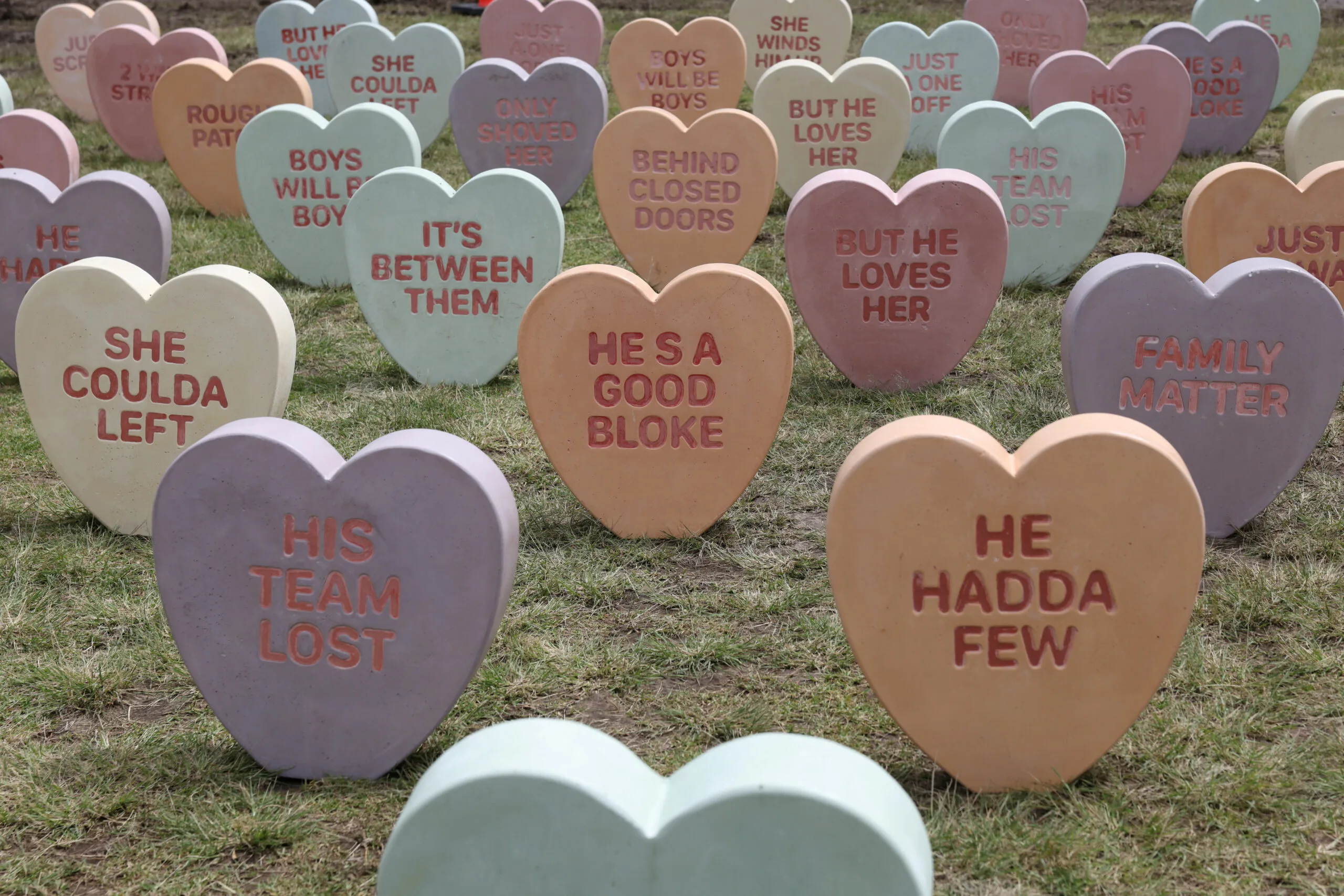
It’s a number that was immortalised in an award-winning art installation at Bondi’s annual Sculpture by the Sea, with a field of 56 hearts representing the lives lost.
Wood’s case is at a preliminary stage and the allegations are yet to be tested in court, but Claire sees value in the high-profile nature of the arrest and court coverage.
“There is responsibility on the justice system to ensure those choosing to use violence are held accountable and there’s also a public responsibility to call out and say this behaviour is unacceptable,” Claire says.



“The high-profile cases escalate those conversations. It’s an opportunity for us to talk about prevention and support of those experiencing family and domestic violence.”
It might also help women in family violence situations recognise this.
Wood, who famously fell in love with Snezana on The Bachelor, is currently appealing the decision to keep him in jail. His legal team is arguing that not enough consideration was given to how long Wood could stay behind bars before his trial.

He has already been denied bail twice and housed in the high-security facility Wolston Correctional Centre since the alleged attack on his wife in Noosa on October 3. Charges against him include strangulation, which in Queensland often leads to bail being refused.
“There are stats that demonstrate strangulation is a precursor to more terrible outcomes; to murder,” Claire explains.
“Some states and territories have recognised that and others haven’t, so some consistent application of the law and the justice system across the country would be helpful for alleged victims. Our call to action with regards to governments is to have a look at that.”
She adds that while high-profile cases are helpful to raise awareness, they should never be held to higher account or used to “make an example”. That includes the presumption of innocence.
“The standard we expect is fair and consistent in every case,” she says. “A woman whose experience doesn’t make the news should access timely protection and support and justice just as much as those cases that are in the media.”
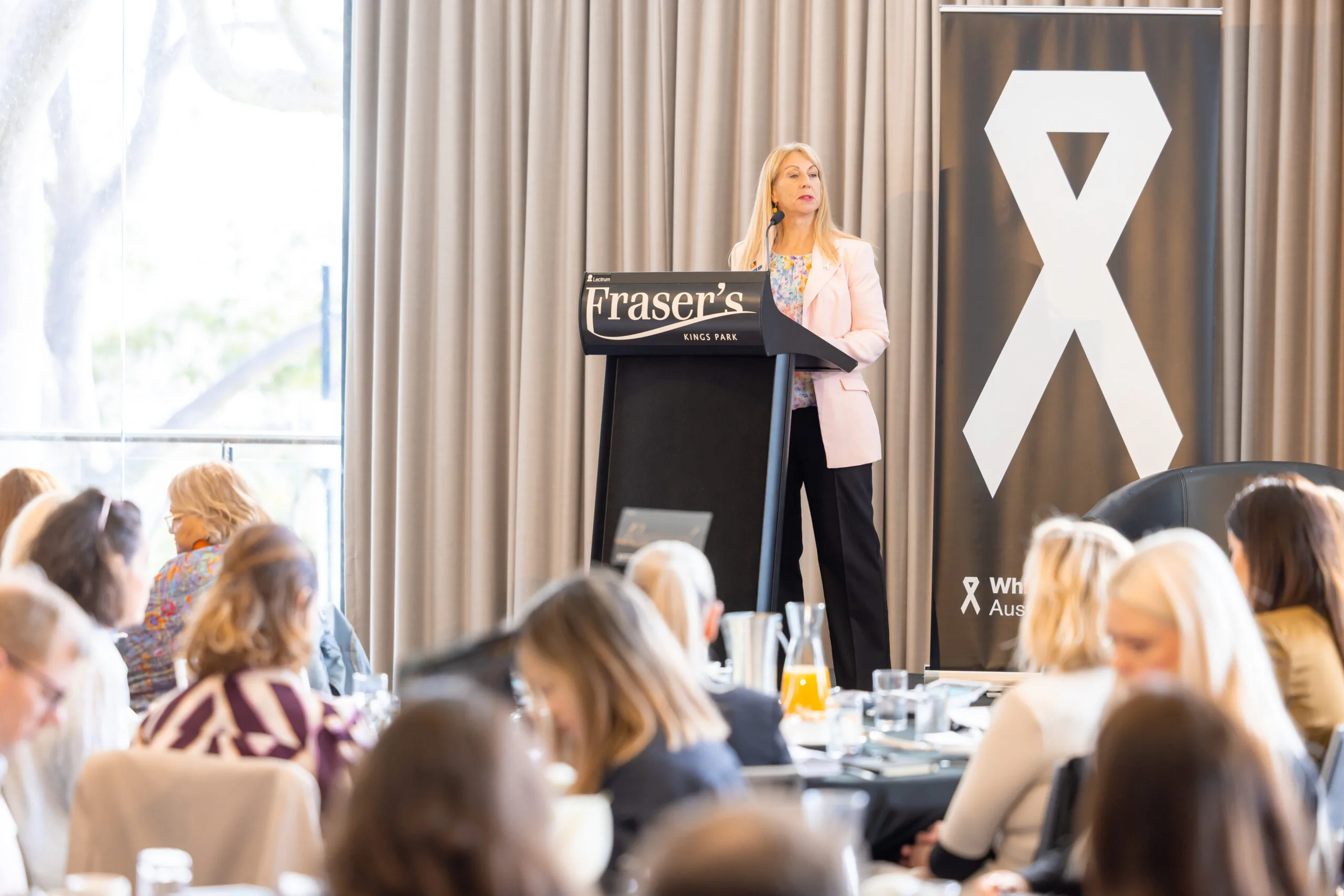
It’s a message particularly pertinent at this time of year with White Ribbon Day approaching on November 25. The global campaign is a time to raise awareness about preventing gender-based violence.
“We encourage people to hold an event, whether it’s fundraising, whether it’s buying some merchandise. You can take a promise which says you’ll stand up against men’s violence against women,” Claire says. “Every woman deserves safety and dignity.”
White Ribbon Day is on November 25, 2026. For more information, visit whiteribbon.org.au
If story has impacted you, or someone you know, help is available. Contact 1800 RESPECT (1800 737 732), or visit the website.

