

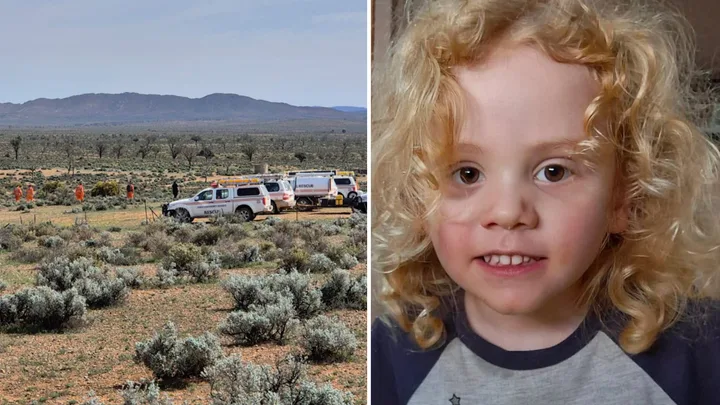
 SA Police/AAP
Three months after Gus Lamont went missing, the police returned to the South Australian property where he disappeared.
The four-year-old was last seen on September 27 at 5pm, playing on a mound of dirt near his family’s Oak Park Station homestead, which is approximately 43 kilometres south of the Yunta township.
Half an hour later, his grandmother went outside to call him, but he was nowhere to be seen. After an intense search, hours later, the police were called at 8.30pm.
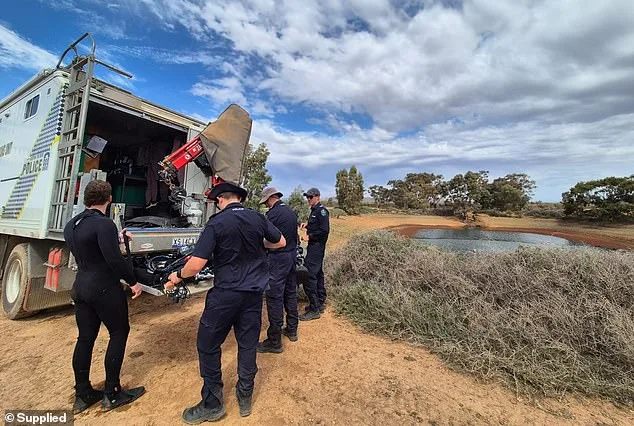
Are the police still looking for Gus?
Ever since, the searches for the four-year-old have intensified, with the police confirming that they spoke with his family and went to the property last week.
“We’ve taken statements with the family, we’ve had to go through those statements with the family, and that’s just part of the normal investigational process that we go through,” Detective Superintendent Darren Fielke said on January 6.
“We continue to engage with them,” he continued.
“They went through a pretty torrid Christmas without Gus, and we check in with the family regularly.”
He said they were exploring “all avenues”, and they will do anything to get answers.
“We won’t rest until we’re satisfied that we’ve done absolutely everything we can to find him, and if we’ve done everything we can and we can’t find him, then that sometimes is what will happen,” he stated.
Before that, the most recent search effort was in November and focused on six unsealed, unfenced mine shafts on the property. At the time, no trace of Gus was found.



What happened to Gus?
When he was announced as missing, his family told the South Australian Police (SAPOL) that he’d never left the property before, and he was a shy but adventurous child.

He was wearing a blue long-sleeved Minions T-shirt, a grey sun hat, and boots.
At the time, SES volunteers, members of the Australian Army and police extensively searched across 60,000 hectares by air and ground.
On October 6, a small footprint was found around a dam about 5.5 kilometres west of the homestead, but it was discovered not to be related to Gus’ disappearance.
A day later, South Australia Police’s (SAPOL) Assistant Commissioner Ian Parrott said that “no trace” of him, such as clothing, a hat, or other tangible pieces of evidence, had been found.
At that point, a search was carried out in a six-kilometre radius of the homestead.
In another statement on the same day, Deputy Commissioner Linda Williams revealed that the search was “scaled back following medical experts advice that there was little hope for us to find Gus alive”.
After that, the case was handed over to the Missing Persons Section.
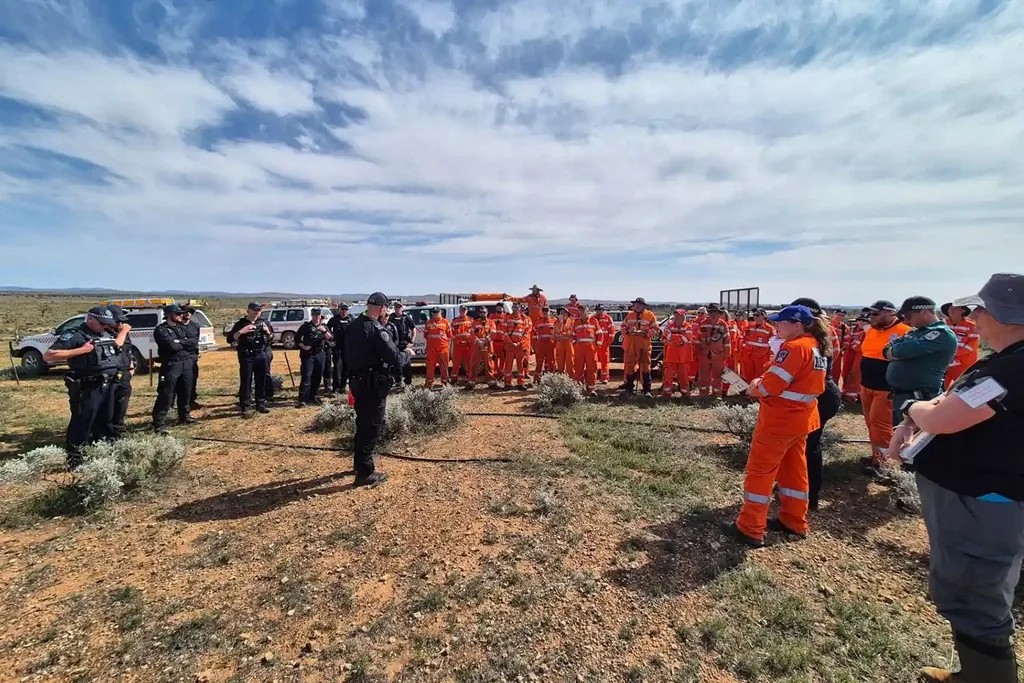
“We will never give up hope of finding Gus,” she said. “There are further lines of enquiry being undertaken and the family have continued to cooperate fully with police.”
On October 27, Flinders University Associate Professor Nina Siversten told 7NEWS it was possible he went beyond their search radius, and it was possible he survived longer than three days.
“If the child could access some sort of moisture or dew or moist leaves that could increase it somewhat beyond the three days,” Siversten said.
“I think that fear would be an absolute factor and that would impact on the ability to move and ability, but also on finding shelter.”
While the police worked off the theory of him wandering off the property, criminologist Xanthe Mallett told our sister publication Woman’s Day that she was concerned about another party’s involvement.
“In that kind of terrain, Gus should’ve been fairly easy to locate had he simply wandered off,” she said.
“But there’s been no sign of him, so you have to think, at this stage, that there’s been third-party intervention, sadly.”

