


Thanks for reading All Access Scoop with Celia, a behind-the-scenes-focused column aimed to pull back the curtain on some of the most loved television series, movies, and theatre productions.
New Idea’s Senior Content Producer Celia Whitley dives into the creative processes, meeting some of the most talented – and passionate – people in the entertainment industry, and discovers what it really takes to turn ideas into reality.
Read on for the latest scoop.
It’s not every day you’re given the opportunity to speak to award-winning screen composers.
I was lucky to meet David Hirschfelder, an exceptionally talented screen composer taking part in the Melbourne Symphony Orchestra Metropolis: Sounds of Cinema concert in Melbourne on Friday 21 August.
The evening is a celebration of some of Australia’s (and the world’s) finest living composers, Metropolis shines a spotlight on the finest minds in contemporary music.
Sounds of Cinema celebrates David’s music, and he will also feature as pianist in the concert – and tells me he will also be using an instrument called the melodica.
“It’s a small handheld reed instrument – a keyboard instrument. I am playing that rather than the accordion, because I have to do changes from instruments within a few seconds or less sometimes. So the melodica, which is in lieu of the piano accordion, is easy. I can just pick it up and play it and then put it down and resume piano again,” he reveals with a smile.
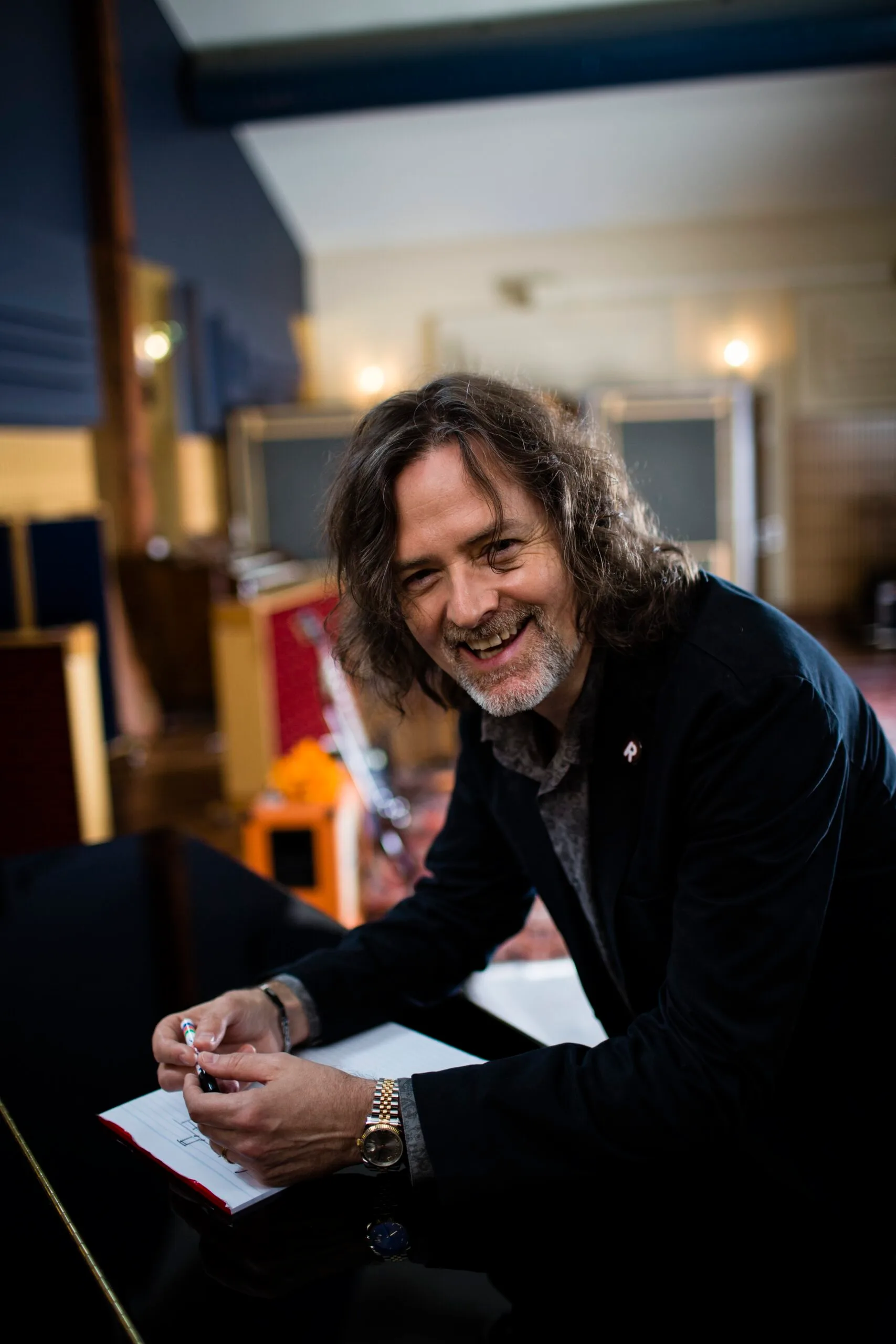
David has an incredibly impressive career – nominated for two Oscars for his work on Shine and Elizabeth, and winning two BAFTA awards for Strictly Ballroom and Elizabeth.
“I always wanted to do what I’m doing now and have been for the last 35 years or more,” he tells me.
And even though he says it took a while for him to “crack the first nut” – his first film score was with Baz Luhrmann for the 1992 film Strictly Ballroom.
“I was trained classically and I started off doing arrangements and compositions on paper, which is the traditional way of writing music,” he says, adding “but by the late 80s we had the technology where you could make sketches electronically and then later have them transcribed or turned into written music for musicians to play and combine that with electronic generated music as well.”

“It’s almost a norm for all composers in this media to combine electronically created sounds with live musicians in some form. It’s almost become easier in some ways,” he reveals.
He tells me he composes “every single note in the score” but it’s a team sport, with a lot of collaboration.
“I am part of the overall creative team. I have to work with the director and the producers and make sure that I’m following the vision of how the music is enhancing their film in the way they want it to. But I have to be always open to making changes – and I actually enjoy that,” he says.
I had to ask David how exactly the process worked when it came to composing – was he just given a written brief, or was he able to watch the video and compose underneath that?
“It’s more common to get the film and start working on that as a backdrop – in fact, the music’s the backdrop – but it’s like a canvas in which you spray musical ideas,” he tells me.
David reveals that quite often, he works on the early edit of a film.
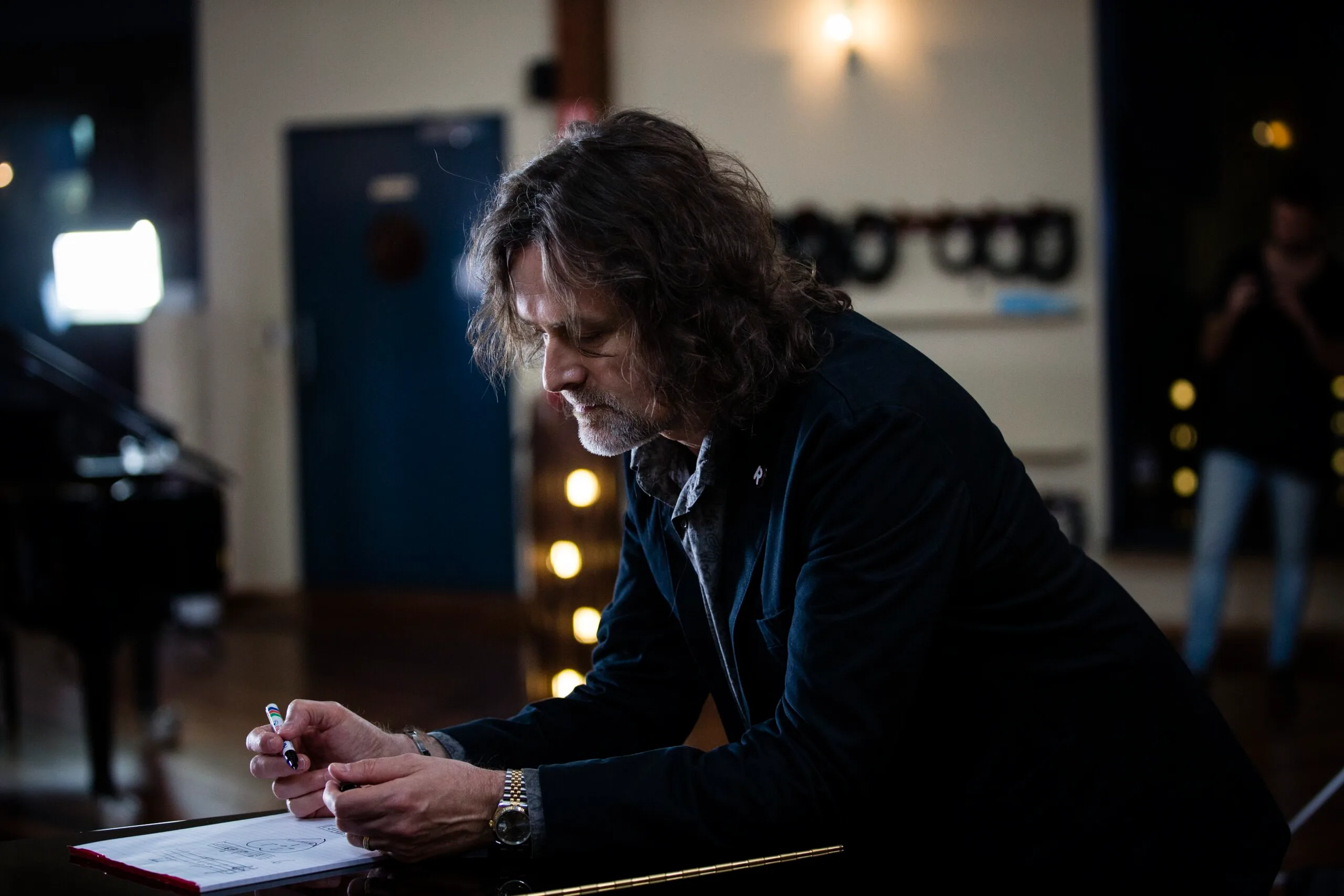
“It’s missing sound effects and it hasn’t been finally edited. Sometimes you have to rework scenes because the filmmakers will respond to the music that I write for a scene… I’ll submit an electronic draft of what I’ve got in mind, and they may need to lengthen the scene. And so they lengthen the scene to allow me to let the music sustain a bit longer and to carry you into the reflective ambience of the character’s thought process or whatever’s happening on the screen,” he says.
“It’s very much a dynamic and interactive process, and that’s what I love about it. It’s so collaborative and we bounce off each other. They bounce off the music and then I bounce back off the performance and the film structure.”
As for his favourite genre? He tells me he loves working in comedy.
“I like films that have a dark comedic twist, like The Dressmaker and Strictly Ballroom, where you combine comedy with drama.”
He also comments that he loves doing crime and psychological thrillers as well because he has to “pull out a completely different side” of his personality.
“I’m not really a psych thriller type personality in real life, but I find that I’m drawn to those things and I like creating music that’s quite devious and puts a different twist to what you’re seeing on the screen and playing with the audience’s emotions,” he confesses.
He also loves documentaries.
“I love scoring them too, because you’re seeing someone’s life as a grand tribute reel to their life and their story,” David says.
See David show off his talents live in the Melbourne Symphony Orchestra Metropolis: Sounds of Cinema concert in Melbourne, on Friday 21 August.
Additionally, this September, the Melbourne Symphony Orchestra’s Grand Organ Festival kicks off at Melbourne Town Hall. Home to the Southern Hemisphere’s largest organ, hear Saint-Saëns, Guilmant and more across three unforgettable concerts. Standard tickets from $45 here.


Share this post