
 New Idea Food
Food is fuel, and here in the New Idea Test Kitchen, we’re dealing with feel-good food on the daily (and maybe a cheeky treat or two, because fuelling that sugar craving counts). Being a noted recipe source, it’s essential that we play our part to help Aussies recognise the benefits of a wholesome home-cooked meal.
Fibre is just one part of our recommended dietary intake that has copped a lot of attention recently, and for good reason: it plays a crucial role for our gut and brain health, appetite and mood. It’s a true all-rounder.
We should be incorporating 30g of fibre per day into our diets, but Dr Joanna McMillan, dietitian and nutritionist, is telling us that most of us aren’t getting enough.
“The benefits of fibre stretch well beyond the gut. Fibre is now emerging as a key player in brain health, appetite regulation, mood stability, hormone balance, and even long-term disease prevention.”
There’s so much to the inner workings of fibre, so Dr McMillan makes a few suggestions for us to incorporate:
- Try a fibre-rich breakfast— high-fibre wholegrain bread or wraps with avocado, seeds, a poached egg
- Add legumes to your meals (think lentils, chickpeas, black beans)
- Choose wholegrains like oats, barley, brown rice, and quinoa
- Snack on a mix of nuts and seeds
- Pack your plate with colourful veggies and fruits
- Embrace herbs and spices for flavour and fibre
- Eat the rainbow and mix it up. Variety matters
Claiming that it’s about embracing a “rich, varied, whole food diet”.
As a prediabetic, along with a number of chronic health conditions, I was forced to jump on the Low-GI high-fibre diet before it was trendy. It’s a constant battle, keeping my health in check. It’s been a matter of simple carb swaps and eliminating processed food – and I can say that my energy, mood regulation and my life overall has changed almost completely because of it.
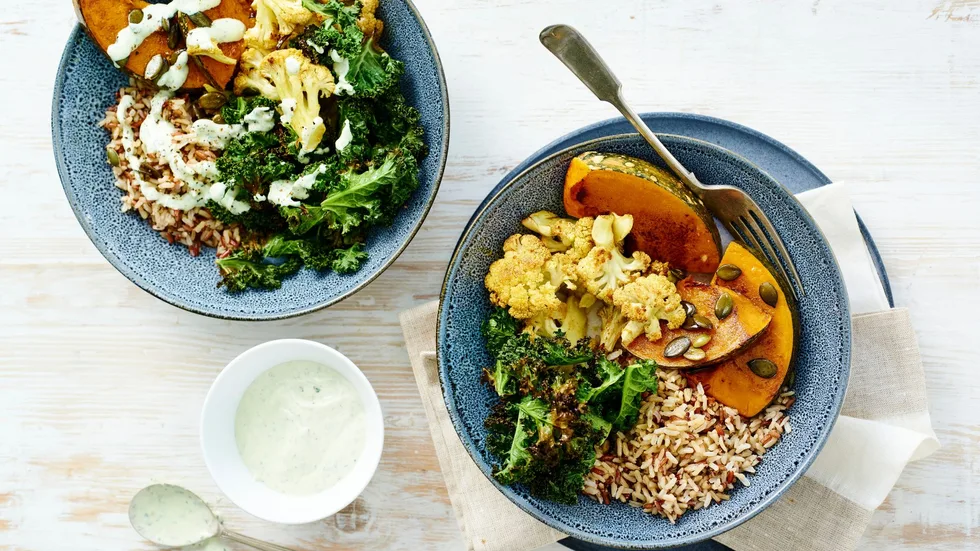
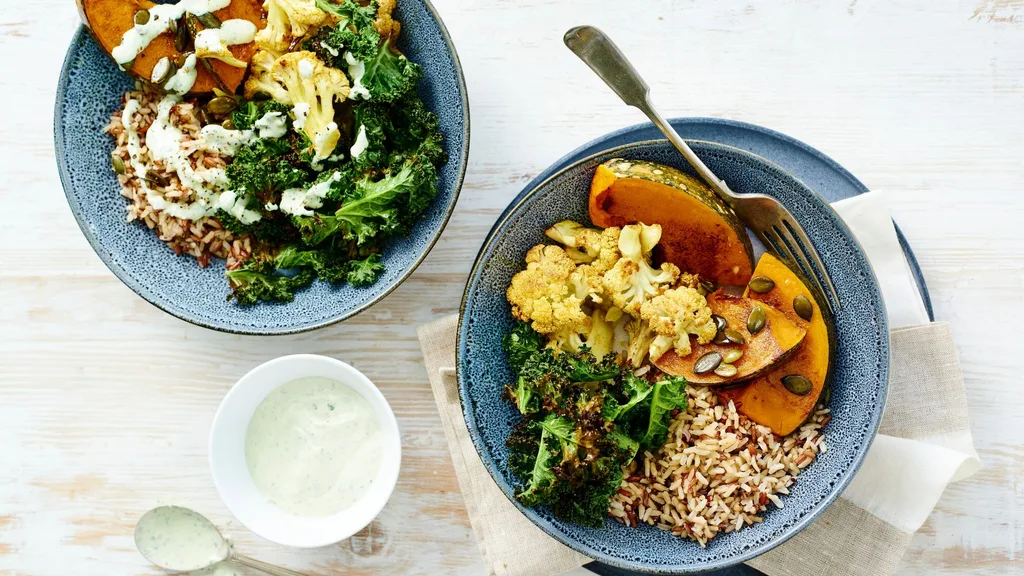
To Dr McMillan’s points above, a cherished recipe of mine is the Roasted Veggie and Grain Buddha Bowl, and is my tasty, wholesome pick for that fibre fix. Because healthy doesn’t have to be boring!
Notice tahini in the dressing? Effectively a sesame paste, this is a go-to ingredient for me: it’s a Middle Eastern marvel that is indeed high in fibre and protein, and adds a gorgeous nutty flavour to a dish such as this – elevating the sweetness of the pumpkin.
Food is all about tailoring it to your individual needs and tastes (because it’s about enjoyment, too), so feel free to replace the brown rice & quinoa cup with another rice or grain blend.
Fibre “is one of the most underappreciated superstars of the modern diet and something most of us simply aren’t getting enough of,” Dr McMillan says.
So why not start here?
Ingredients
Method
Grease and line two large oven trays with baking paper.
Cut pumpkin into 2-3cm thick slices. Cut each slice in half crossways. Place pumpkin and cauliflower in a large bowl. Sprinkle with seasoning. Drizzle over 2 tbsp of the oil. Toss to coat. Transfer to a prepared oven tray.
Cook in a 220°C (fan-forced) preheated oven for 25-30 mins, or until tender. Remove.
Place kale on the other prepared oven tray. Drizzle over remaining oil. Season with salt and pepper. Toss to coat.
Reduce oven to 150°C and cook for 10-12 mins, or until crisp. Remove.
DRESSING: Blend all ingredients with 1 tbsp water in a blender until combined. Season with salt and pepper.
Divide rice and quinoa, roasted vegies and kale between two serving bowls. Drizzle over dressing. Sprinkle with pepitas.