

Content warning: This article references drug use. If this topic is distressing, or you, or someone you know, is affected, help is always available. Contact the National Alcohol and Other Drug Hotline by calling 1800 250 015.
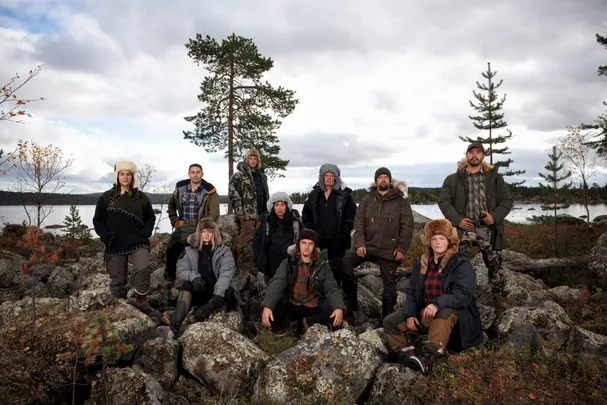
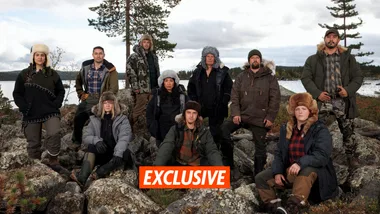
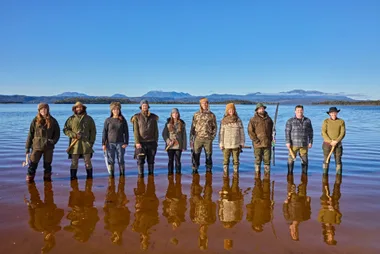
Alone Australia 2026 began with 10 survivalists taking a leap of faith, and in the end, Trent was the winner!
The former Navy chef managed to stay in the heart of the Arctic Circle, in Finland’s Sápmi region, for 52 days, earning him the $250,000 prize.
Throughout the show, there were challenges with sourcing food, mental and physical exhaustion and declining health.
This meant they either tapped out or the medics told them it wasn’t safe for them to continue.
Find out who left Alone Australia 2026 and read our exclusive interviews with them about their journeys on the show below.
Who left Alone Australia 2026?

Jasper
24, Permaculture Practitioner and Educator, WA
Jasper came second and was told it wasn’t safe for him to continue.
The 24-year-old spent 48 days in the Arctic Circle.
Sadly, the medical extraction team told him he needed to leave because the infection in his hand had worsened and spread.
If he had stayed, there was a serious risk of sepsis if it was left untreated.
When he was told the news, he just said, “It’s okay”.
“These 48 days have been some of the best of my life. I’m proud of how far I pushed myself and feel at peace knowing I’ve done the experience justice,” he shared.
“I got my metamorphic growth here. For a caterpillar to turn into a butterfly, it first has to turn to mush. You have to be turned to mush in order to grow. This place mushed me time and time again.”
“Every time I hit a hard moment, I got mushed, and when I came out the other side, I’d grown a little bit. I’m so
happy to be leaving here a new person.”

Clint
57, Sheep & Cattle Farmer, NZ
Despite being an avid fisher, Clint didn’t have any luck catching fish.
As time went on without protein, his health declined. Just before he tapped out after 47 days, the 57-year-old spent the night before that throwing up.
Realising he had pushed his body beyond its capacity, he decided to walk away.
“It’s a tough environment – the toughest environment I’ve ever been in,” he began.
“The idea of winning was always in the back of my mind, but the whole objective for me really was to push myself hard, just to see what I could do, and I’ve done that.
“The money would’ve been nice, but there are things in life worth more than money – like health, love, companionship, friends and family. When you haven’t got them, you realise just how important they are.”

Dylan
35, DFV (Domestic and Family Violence) High Risk Coordinator and Search and Rescue Tracker, Queensland
Dylan walked away from the Arctic Circle after spending 43 days completely alone.
As time went on, he injured his back and struggled to make it through each day. Having been medically discharged from the Army because of his back, this time, he didn’t want to be told that he had to leave.
“I have a history of pushing myself too far, and I knew I needed to come home safely, so I was making the right decision for my body and my family,” he exclusively tells New Idea.
“I was sad that there were many things left that I really wanted to do before coming home, but I was also so excited that I’d get to spend time with my family again soon.”
Months after filming the gruelling show, he explains that he had no permanent damage to his back, and has since regained his strength.
Looking back at his time alone, it’s taught him about resilience and looking after himself.
The experience has also influenced his outlook on life.
“When I left to go out onto the land, I was a fragmented person,” the Palawa man explains.
“So many different parts of me were expressed depending on where I was and who I was around, but I never really felt whole because I was so busy that I never had the time to reflect on things I experienced and who I was.”
“Being out there, I became more aware of myself and brought back a version of me who is more present in life, more grateful for the things that matter most to me, and more appreciative of the time I have with my family and friends.”
Reuniting with his little boy, Jensen, was also a blessing.
“When I left, Jensen was only saying a few words, but when I came back, he was speaking in sentences! It was surreal. He was almost as excited as I was!” he gushes.
Going into the experience, he and his wife, Jemma, hoped to spend the money on IVF to give their son a sibling.

Dougy
43, Electrician, WA
Dougy was advised to withdraw from the competition after he spent 32 days in the Arctic Circle.
His time in isolation didn’t come without its challenges.
Despite being an experienced hunter, he didn’t have luck with catching fish in his final two weeks and went without for 13 days.
“When going into this challenge, the thought never once crossed my mind that I would be pulled out. It wasn’t even a worry at the back of my mind,” he tells New Idea.
“I used everything in my arsenal to get the fish in the bag, but nature showed me who the boss. I am super chuffed that I didn’t stop. I fought all the way.
“I wouldn’t say it was the fishing that was frustrating; I’d say it was not being able to move to a better spot that was more frustrating, but that was what we signed up for.”
When the medics did their regular check-up, they worried when he said he experienced dizzy spells, struggled to breathe, and saw white flashes.
He also said that when he tried to cut wood for fire, his heart rate would accelerate. When they said it was too dangerous for him to stay, he was devastated.
“I definitely had more in me,” he says. “I would have just slowed down a bit. I’m terrible for being on turbo mode. I was flogged out, but I wasn’t dead yet.”
“I was going to minimise the risk and retire the kayak.”
“If I thought I was in serious trouble, I would have hit the button, but I would have to of been lying there half dead before I’d done that.”
However, the 43-year-old explained that his own father died of a heart attack at his age, and he didn’t want his own children to experience the grief he went through.
“Reflecting on the memories of my dad when I was out there was just another day of thinking about it,” he explains.
“Nothing really heavy, just the odd thought when I allow it. But I thought it would be good to give some bloody good words of wisdom to ‘A fathers son’. As you never know what’s around the corner.”
“A good few people have said, it did them well and they told their dad what I didn’t. That alone, was awesome to hear.”

Sia
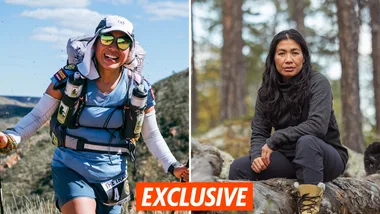
44, Design Project Consultant / Ultramarathon Runner, VIC
Sia’s journey on Alone came to an end when the medics told her that she had a frostbitten toe, and if she chose to stay longer, the consequences could be dire.
Having dealt with frostbite in Antarctica, she hoped that she could stick it out. However, she discovered she had no feeling in it, and chose to leave after 28 days in isolation.
Speaking with New Idea, she says it was sad to walk away from the experience when she felt like she had more to give.
“It was a decision based on what I believed was best for my girls,” she explains.
“In that moment, I was choosing the most important role I will ever have, being their mum. But there was also this worry in the back of my mind: had I stayed long enough? Had I done enough? Had I made the statement I went out there wanting to make? But sometimes being strong isn’t about how long you can endure something, it’s knowing what matters most.”
Going into the experience, she wanted to approach it one day at a time and didn’t plan to focus on the competitive aspect.
“One of my biggest mental challenges was learning to control my own thoughts and trying not to think about food,” the ultramarathon runner reveals.
“During the day, I could keep myself busy, but nighttime was completely different. I would lie there and mentally go through almost every meal I had ever eaten in my life. Meals from my childhood, favourite dishes, restaurants, things I had cooked, even the most ordinary foods suddenly felt like the greatest meal on earth.”
Even though her time was cut short, she believes she thrived, despite fearing the aspect of being alone.
That said, she was surprised by her mental resilience.
Since coming back, she says she appreciates the smaller things more, and you don’t need much to be happy.

Arash
32, Wrecking Yard Manager, QLD
Arash was born in a rural village in Afghanistan and grew up in a warzone, where foraging, fishing and hunting limited materials became essential.
As each day passed during his time on Alone Australia, he said he was purely in survival mode.
The medics panicked when they did their regular welfare check on day 26, and found his site abandoned, and he left his satellite phone, emergency tracker, camera gear and safety supplies behind.
As part of the show, the contestants must keep their phones and trackers on them at all times in case of emergencies.
During the episode that aired on August 12, the show revealed that he was immediately pulled from the show because he ignored these rules.
“To walk away like this, it hurts,” he said after he left his patch of land. “But the only person that I can blame is myself.”
“It’s very hard to accept, to survive so many things in real life and to come and grab a beautiful opportunity like this and make a blunder.”
“Cause I grew up in a war zone, and I crossed seven countries with no documents. Got lost in the sea, slept in the jungle, and I think this experience activated a survival mode that I know the best.”
“And when I get in that mode, rules don’t matter.”
When asked for a comment on the matter, Alone’s Supervising Executive Producer, Riima Daher, tells New Idea it was “devastating” to remove him.
“Arash had an excellent shelter, and his survival systems were all coming together when this happened, so extracting him from Alone Australia was a devastating decision, but it was the only possible decision.”
“We have a critical responsibility for the safety of every participant and crew member, and our protocols are non-negotiable mandatory practice for everyone involved.”
“Arash’s achievements in his previous 26 days on the land were impressive, and we hold respect for that journey. Seeing his time cut short because of an avoidable mistake is devastating, but above all else, we were very relieved to find him safe and well.”

Alyce
36, Aboriginal Community Engagement Senior Advisor, WA
With plenty of trekking experience under her belt and a deep understanding of the land, Alyce was ready to give Alone everything she had.
In her early days in Finland, she injured her hip and almost called it quits. However, she decided to persevere.
But she hit another hurdle when she failed to catch any fish, and she decided to call it quits after 19 days.
As the avid coastal and freshwater fisher tried different techniques, the lack of success got the better of her.
She went into the wilderness with fluorescent streaks in her hair, which she planned to use to lure fish in, but that too was fruitless.
“It’s devastating to say that fishing is your best skill and you can’t manage to catch a single fish,” she vented in frustration.
The self-confessed “fishing queen” said it was “heartbreaking” that the skill she thought she could use to outlast the others wasn’t coming in handy.
Refusing to let herself go hungry, she chose to tap out.
“Right now, I feel ready to go,” she reflected as she got on the boat to leave the Arctic Circle.
“Nineteen days without a fish is really tough, but I love this land, and it’s been a huge privilege to be here on my little parcel of Sapmi.”

Lillian Alone Australia
25, International Outdoor Guide, Northern Territory
Having grown up in Sweden and acclimatised to harsh temperatures, Lillian was keen to attack the Arctic Circle.
However, as the days went on, she mentally struggled.
On her last day, she reflected on a time when she ventured to the top of Nepal’s Mera Peak with her partner, Holden, and held the photo she took of him there.
Looking back on it and comparing it to her time in isolation, she said she struggled with migraines and had low blood pressure, but still pushed through it to make it to the top by sunrise.
Even though she said she was proud of herself, she acknowledged that she could have been seriously hurt and put the other people present at risk.
With all of this in mind, she decided to tap out of Alone after 13 days.
“I’ve been a lot in my head during this time, and I think I need to know when it’s okay to take a step back,” she said, reflecting on her experience.
“I usually don’t do that; I usually keep going and going until I hurt myself, and I feel like I already have a little bit, and I just need to learn to just step back from that and actually take care of myself,” she continued, fighting through tears.
Even though she was walking away, she was “honoured” to do it.
“The Arctic Circle is a part of me,” she said.

Misty
29, Adventure Tour Guide, Victoria
Going into Alone, Misty knew she had a challenge ahead of herself, but she was determined to see how much she could push herself.
Throughout her time in the Arctic Circle, she looked back on her past. She reflected on taking drugs for the first time as a teen, and how nature helped her become clean.
She also touched on previously being homeless, and how at 29, she had a roof over her head for the first time.
The adventure tour guide tells New Idea that before she entered Finland, she wrote herself a $250,000 cheque to manifest her being the last one standing.
But that all changed when she saw a herd of reindeer, making her reflect on the loved ones she left behind at home.
“I tried to track them and couldn’t find them again,” she says about her encounter.
“When they returned, I was sitting in that mental suffering of ‘Do I stay or do I go?’ My whole life I’ve tried to find meaning in things and answers from nature; this felt like the answer I needed. That I don’t need to do this alone, that I need to return to my people.”
The emotional toll is then what led her to tap out after seven days.
Even though she left earlier than expected, she tells us that she’s proud of what she achieved.
“I have to honour the person out there who decided to tap out, because she isn’t the person at home with a belly full of food surrounded by loved ones making the decision,” she explains.
Due to past experiences, she tells us she was worried that she wouldn’t have support because she left earlier than expected.
But that wasn’t the case.
“The love has poured in like floodgates bursting,” she continues.
“Since returning home, I have found the courage to actually leave a place for the first time and build a home. Getting the keys and walking in the door was such an emotional experience,” she explains. “For the first time in a very long time, home feels safe and secure.”
Despite not winning the prize money, she’s still determined to create a sanctuary where troubled youth can access support.
In the meantime, she says she’s been invited to speak with Year 12 students about her life, which has been a rewarding experience.
“A few have already given me the opportunity to feel like the person I needed when I was 15,” she tells us.
For almost 125 years, New Idea has been Australia’s most trusted source for celebrity news, royal updates, and real-life stories. We don’t just share the news – we live it, verify it, and stand by it. Read more about us, our history, and our contributors here.

